Exercise Comparison
3/4 Sit-Up vs Knee/Hip Raise On Parallel Bars


Side-by-Side
Muscle Analysis
Shared
Instructions
3/4 Sit-Up
Lie down on the floor and secure your feet. Your legs should be bent at the knees.
Place your hands behind or to the side of your head. You will begin with your back on the ground. This will be your starting position.
Flex your hips and spine to raise your torso toward your knees.
At the top of the contraction your torso should be perpendicular to the ground. Reverse the motion, going only ¾ of the way down.
Repeat for the recommended amount of repetitions.
Knee/Hip Raise On Parallel Bars
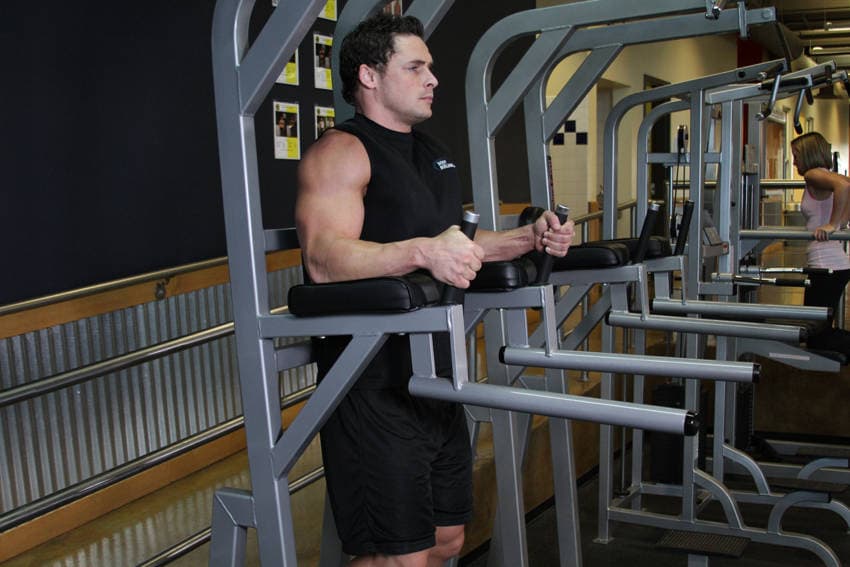
Position your body on the vertical leg raise bench so that your forearms are resting on the pads next to the torso and holding on to the handles. Your arms will be bent at a 90 degree angle.
The torso should be straight with the lower back pressed against the pad of the machine and the legs extended pointing towards the floor. This will be your starting position.
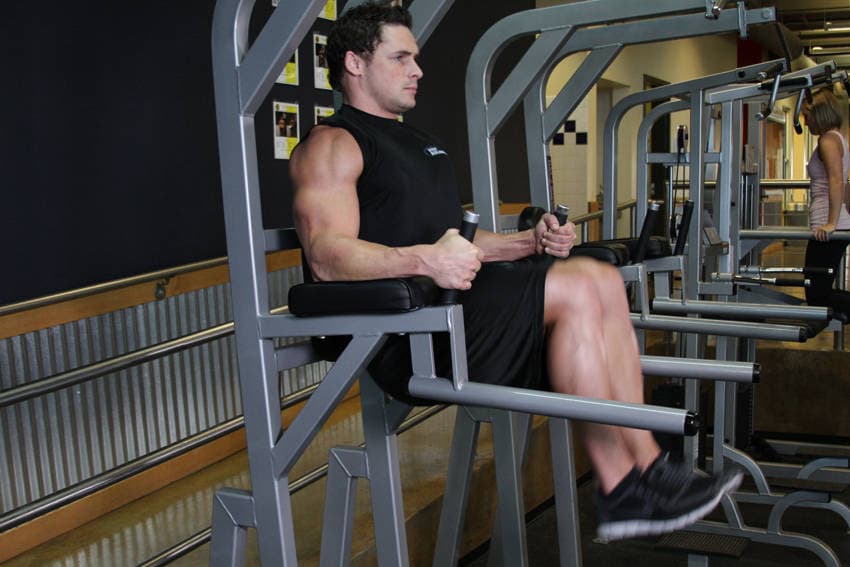
Now as you breathe out, lift your legs up as you keep them extended. Continue this movement until your legs are roughly parallel to the floor and then hold the contraction for a second. Tip: Do not use any momentum or swinging as you perform this exercise.
Slowly go back to the starting position as you breathe in.
Repeat for the recommended amount of repetitions.
Verdict
Both exercises target the abdominals. 3/4 Sit-Up is a beginner exercise using bodyweight, while Knee/Hip Raise On Parallel Bars is beginner and uses other. Choose 3/4 Sit-Up if you have access to bodyweight, or Knee/Hip Raise On Parallel Bars if you prefer other. 3/4 Sit-Up is a compound movement working multiple joints, making it better for overall strength. Knee/Hip Raise On Parallel Bars isolates the target muscle for focused development.