Exercise Comparison
3/4 Sit-Up vs Suspended Reverse Crunch
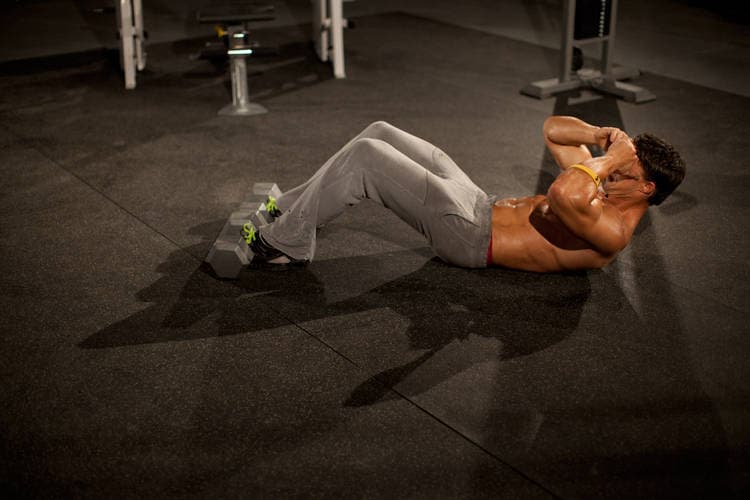
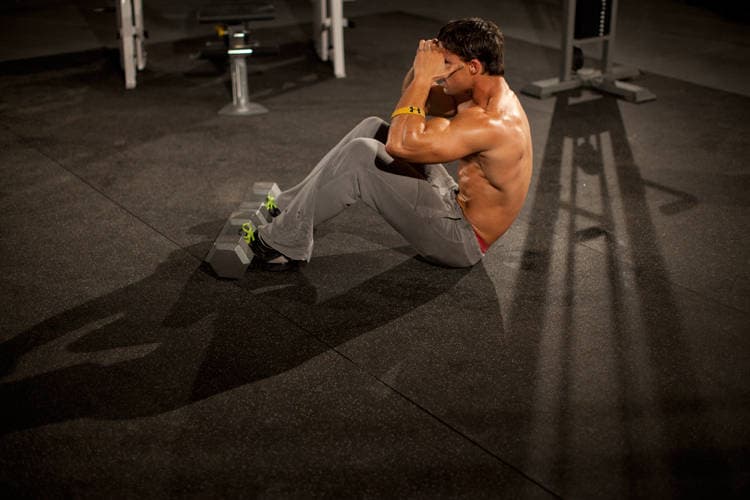
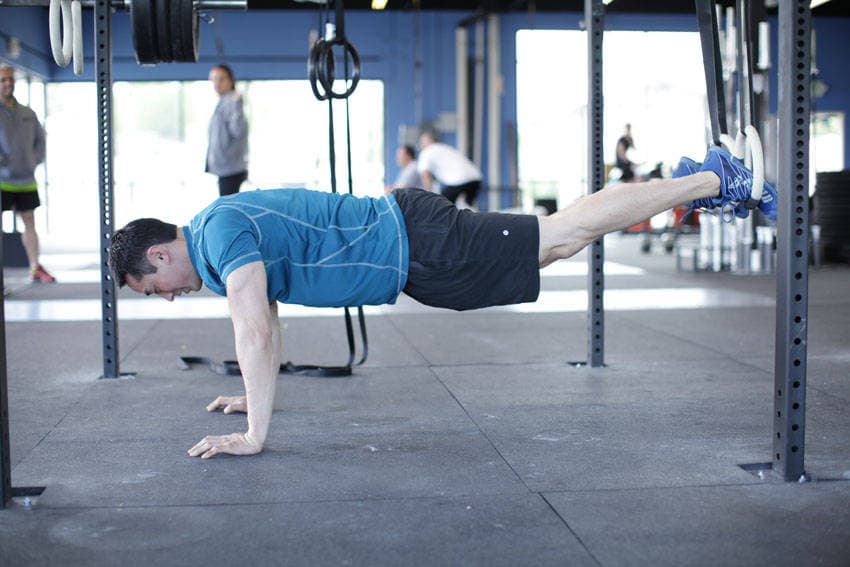
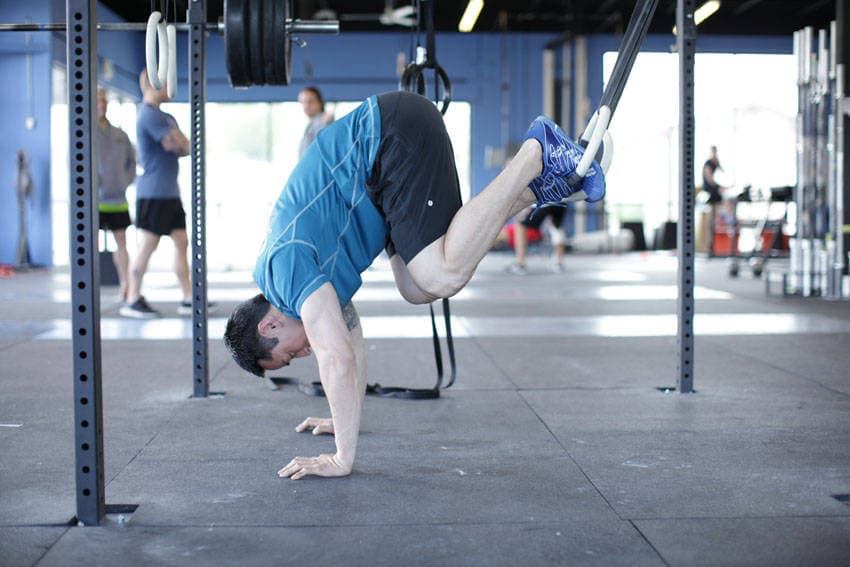
Side-by-Side
Muscle Analysis
Shared
Instructions
3/4 Sit-Up
Lie down on the floor and secure your feet. Your legs should be bent at the knees.
Place your hands behind or to the side of your head. You will begin with your back on the ground. This will be your starting position.
Flex your hips and spine to raise your torso toward your knees.
At the top of the contraction your torso should be perpendicular to the ground. Reverse the motion, going only ¾ of the way down.
Repeat for the recommended amount of repetitions.
Suspended Reverse Crunch
Secure a set of suspension straps with the handles hanging about a foot off of the ground. Move yourself into a pushup plank position facing away from the rack.
Place your feet into the handles. You should maintain a straight posture, not allowing the hips to sag. This will be your starting position.
Begin the movement by flexing the knees and hips, drawing the knees to your torso. As you do so, anteriorly tilt your pelvis, allowing your spine to flex.
At the top of the controlled motion, return to the starting position.
Verdict
Both exercises target the abdominals. 3/4 Sit-Up is a beginner exercise using bodyweight, while Suspended Reverse Crunch is beginner and uses other. Choose 3/4 Sit-Up if you have access to bodyweight, or Suspended Reverse Crunch if you prefer other. 3/4 Sit-Up is a compound movement working multiple joints, making it better for overall strength. Suspended Reverse Crunch isolates the target muscle for focused development.