Exercise Comparison
Alternating Deltoid Raise vs Circus Bell
Side-by-Side
Muscle Analysis
Shared
Only in Circus Bell
Instructions
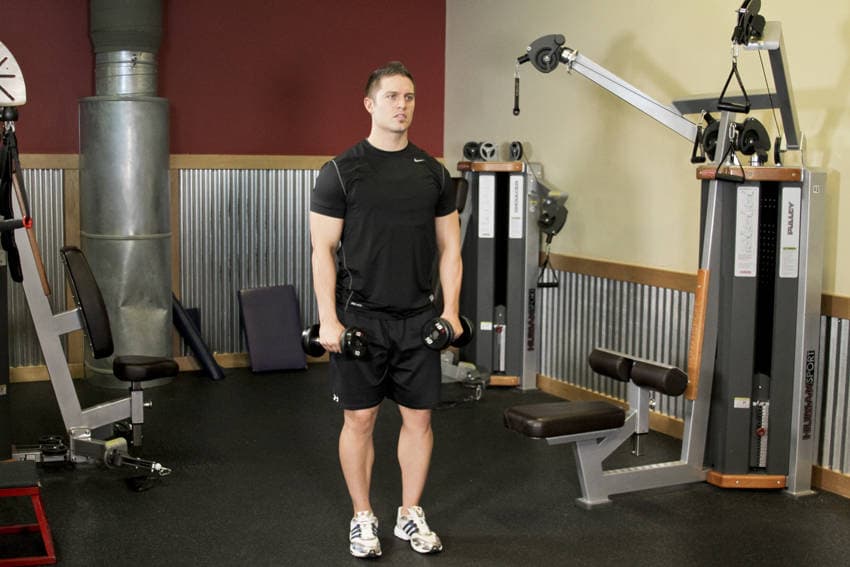
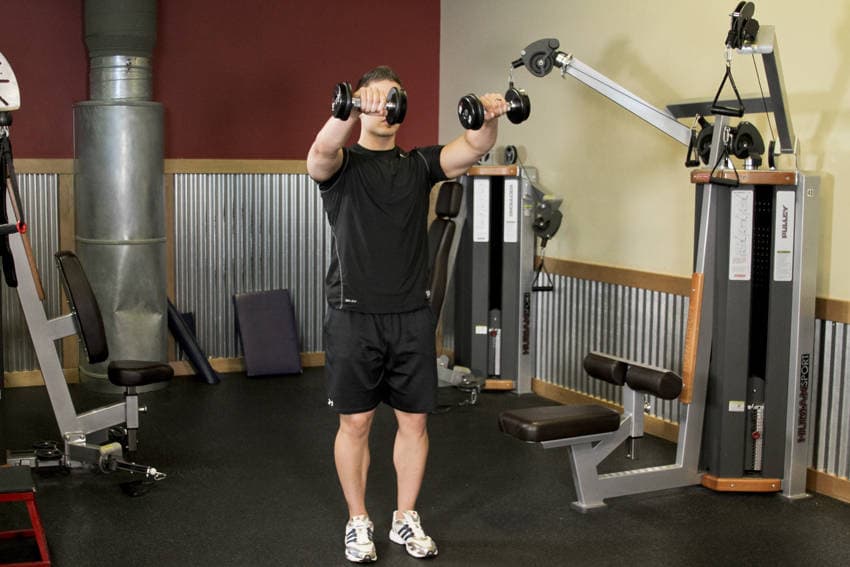
Alternating Deltoid Raise
In a standing position, hold a pair of dumbbells at your side.
Keeping your elbows slightly bent, raise the weights directly in front of you to shoulder height, avoiding any swinging or cheating.
Return the weights to your side.
On the next repetition, raise the weights laterally, raising them out to your side to about shoulder height.
Return the weights to the starting position and continue alternating to the front and side.
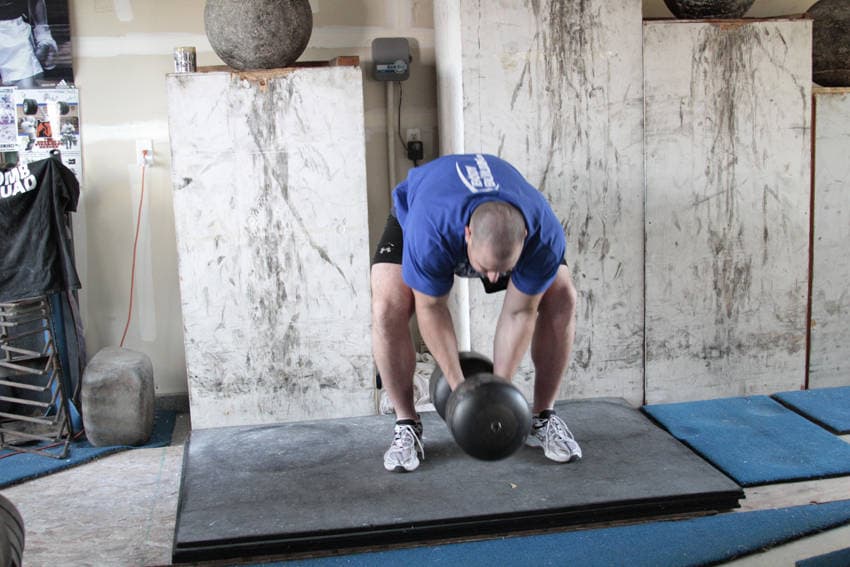
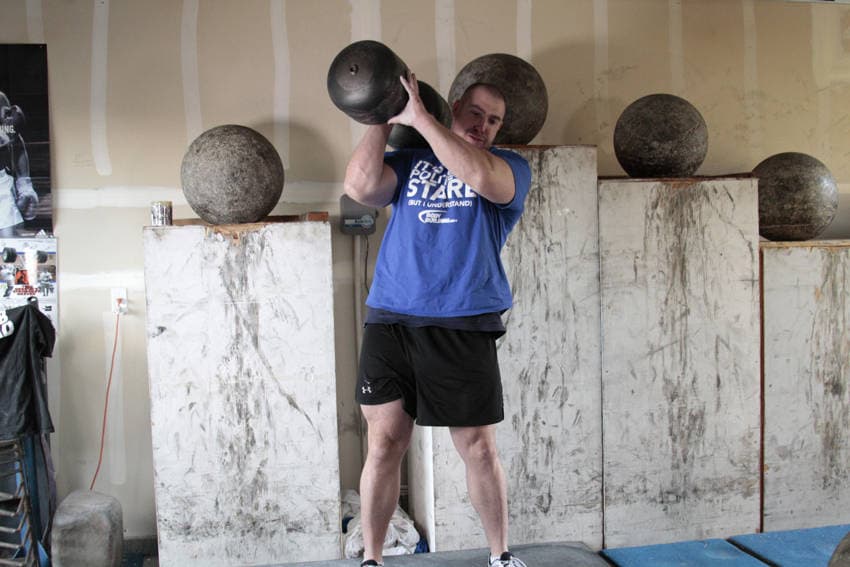
Circus Bell
The circus bell is an oversized dumbbell with a thick handle. Begin with the dumbbell between your feet, and grip the handle with both hands.
Clean the dumbbell by extending through your hips and knees to deliver the implement to the desired shoulder, letting go with the extra hand.
Ensure that you get one of the dumbbell heads behind the shoulder to keep from being thrown off balance. To raise it overhead, dip by flexing the knees, and the drive upwards as you extend the dumbbell overhead, leaning slightly away from it as you do so.
Carefully guide the bell back to the floor, keeping it under control as much as possible. It is best to perform this event on a thick rubber mat to prevent damage to the floor.
Verdict
Both exercises target the shoulders. Alternating Deltoid Raise is a beginner exercise using dumbbell, while Circus Bell is expert and uses other. Choose Alternating Deltoid Raise if you're looking for a more accessible option, or Circus Bell for a greater challenge. Circus Bell is a compound movement working multiple joints, making it better for overall strength. Alternating Deltoid Raise isolates the target muscle for focused development.