Exercise Comparison
Alternating Deltoid Raise vs Crucifix
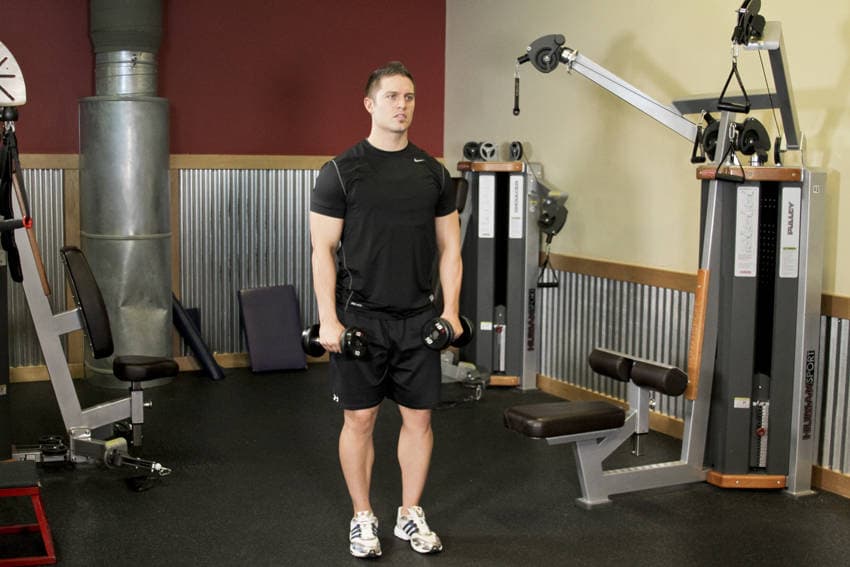
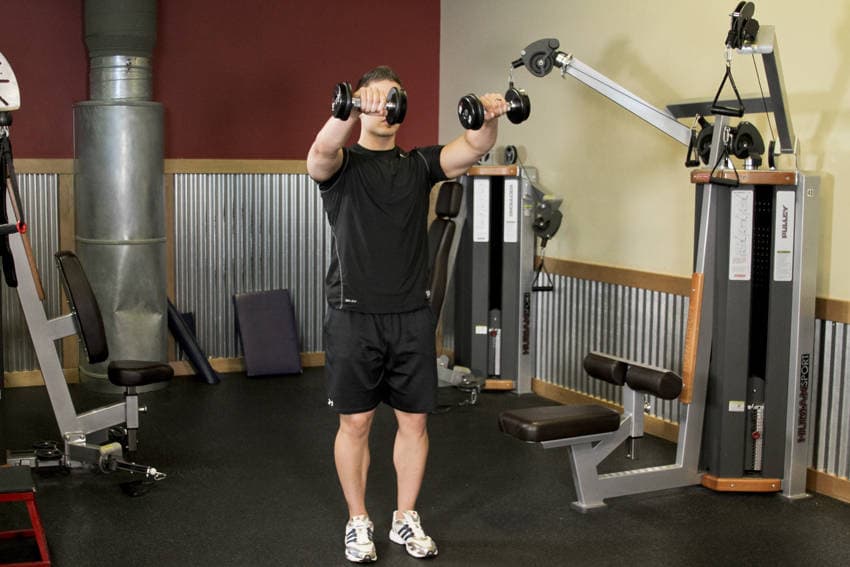
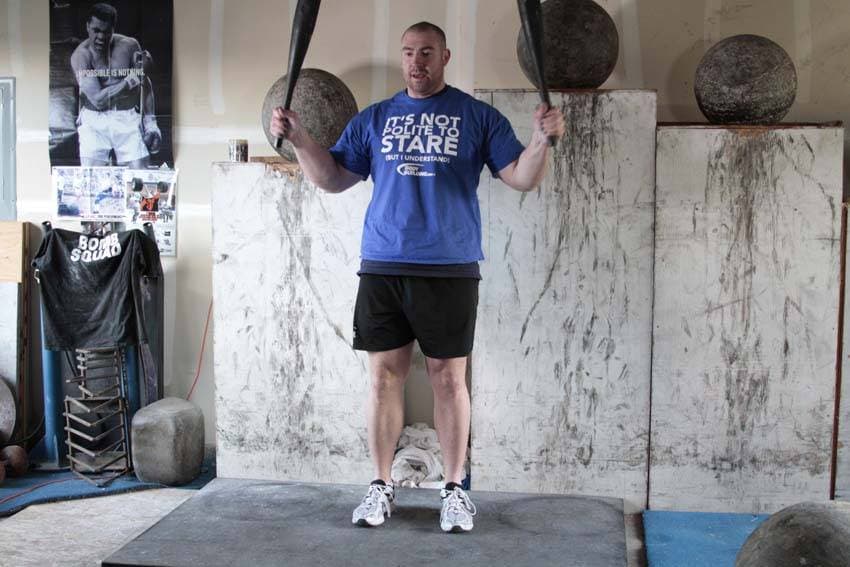
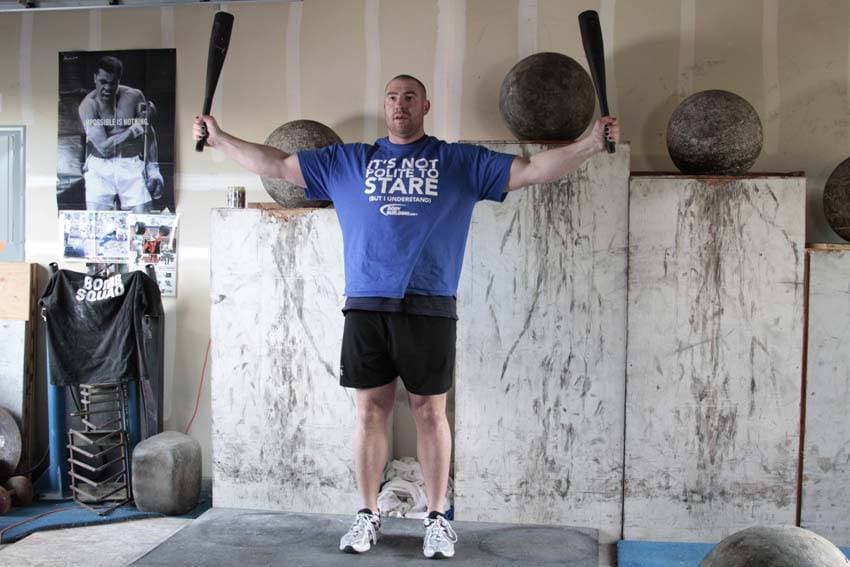
Side-by-Side
Muscle Analysis
Shared
Only in Crucifix
Instructions
Alternating Deltoid Raise
In a standing position, hold a pair of dumbbells at your side.
Keeping your elbows slightly bent, raise the weights directly in front of you to shoulder height, avoiding any swinging or cheating.
Return the weights to your side.
On the next repetition, raise the weights laterally, raising them out to your side to about shoulder height.
Return the weights to the starting position and continue alternating to the front and side.
Crucifix
In the crucifix, you statically hold weights out to the side for time. While the event can be practiced using dumbbells, it is best to practice with one of the various implements used, such as axes and hammers, as it feels different.
Begin standing, and raise your arms out to the side holding the implements. Your arms should be parallel to the ground. In competition, judges or sensors are used to let you know when you break parallel. Hold for as long as you can. Typically, the weights should be heavy enough that you fail in 30-60 seconds.
Verdict
Both exercises target the shoulders. Alternating Deltoid Raise is a beginner exercise using dumbbell, while Crucifix is beginner and uses other. Choose Alternating Deltoid Raise if you have access to dumbbell, or Crucifix if you prefer other.