Exercise Comparison
Alternating Deltoid Raise vs Handstand Push-Ups
Side-by-Side
Muscle Analysis
Shared
Only in Handstand Push-Ups
Instructions
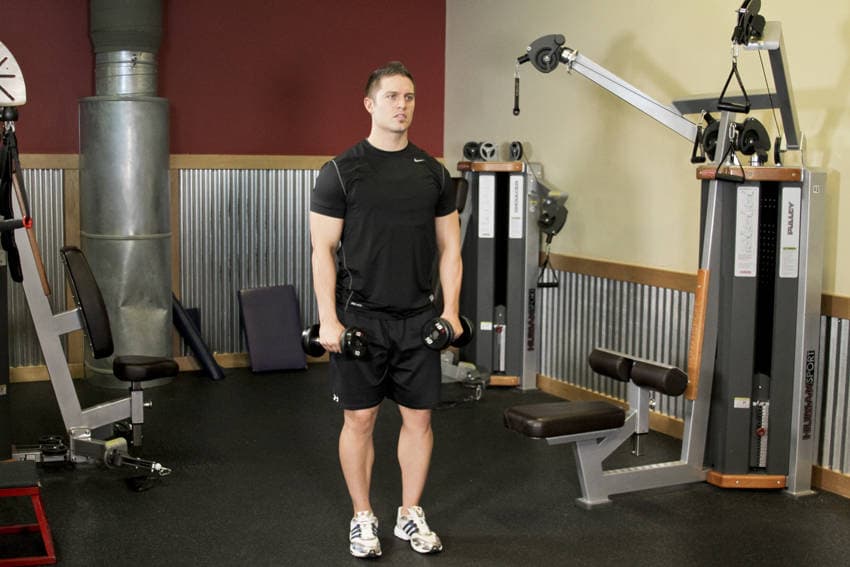
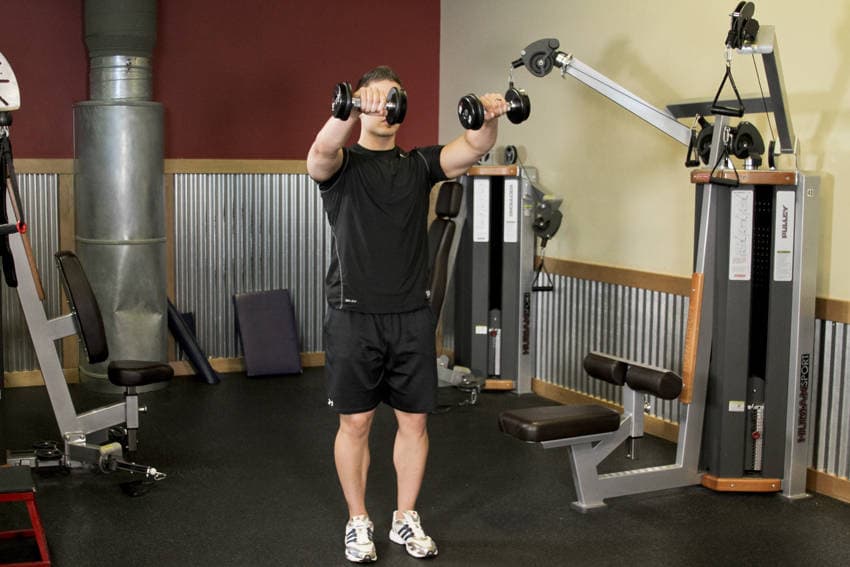
Alternating Deltoid Raise
In a standing position, hold a pair of dumbbells at your side.
Keeping your elbows slightly bent, raise the weights directly in front of you to shoulder height, avoiding any swinging or cheating.
Return the weights to your side.
On the next repetition, raise the weights laterally, raising them out to your side to about shoulder height.
Return the weights to the starting position and continue alternating to the front and side.
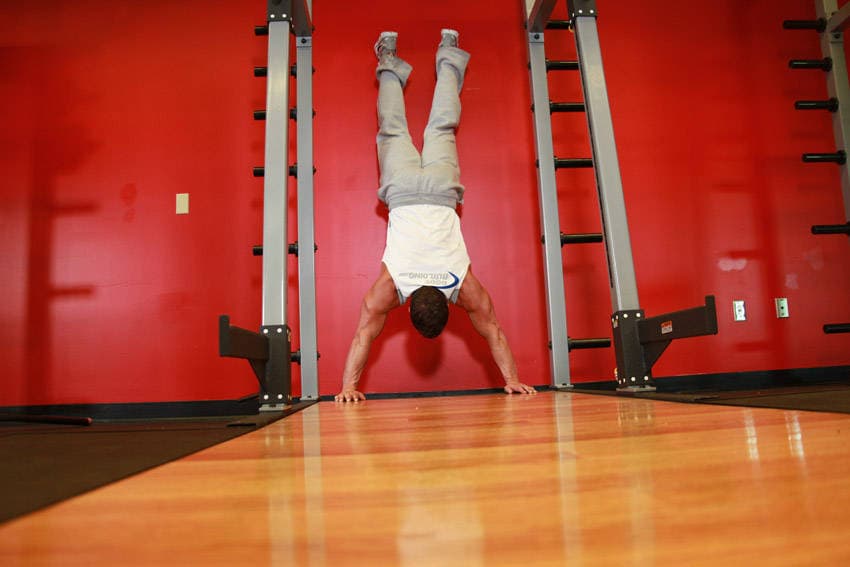
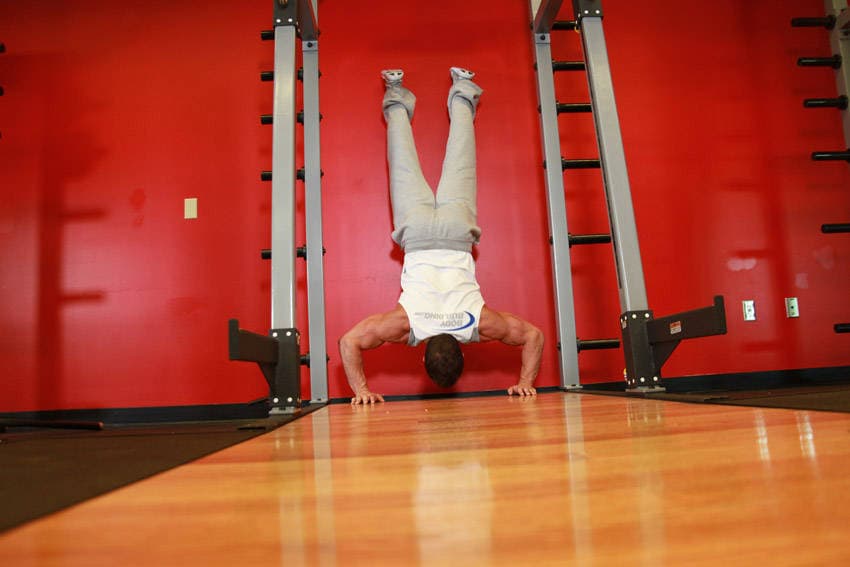
Handstand Push-Ups
With your back to the wall bend at the waist and place both hands on the floor at shoulder width.
Kick yourself up against the wall with your arms straight. Your body should be upside down with the arms and legs fully extended. Keep your whole body as straight as possible. Tip: If doing this for the first time, have a spotter help you. Also, make sure that you keep facing the wall with your head, rather than looking down.
Slowly lower yourself to the ground as you inhale until your head almost touches the floor. Tip: It is of utmost importance that you come down slow in order to avoid head injury.
Push yourself back up slowly as you exhale until your elbows are nearly locked.
Repeat for the recommended amount of repetitions.
Verdict
Both exercises target the shoulders. Alternating Deltoid Raise is a beginner exercise using dumbbell, while Handstand Push-Ups is expert and uses bodyweight. Choose Alternating Deltoid Raise if you're looking for a more accessible option, or Handstand Push-Ups for a greater challenge. Handstand Push-Ups is a compound movement working multiple joints, making it better for overall strength. Alternating Deltoid Raise isolates the target muscle for focused development.