Exercise Comparison
Alternating Deltoid Raise vs Leverage Shoulder Press
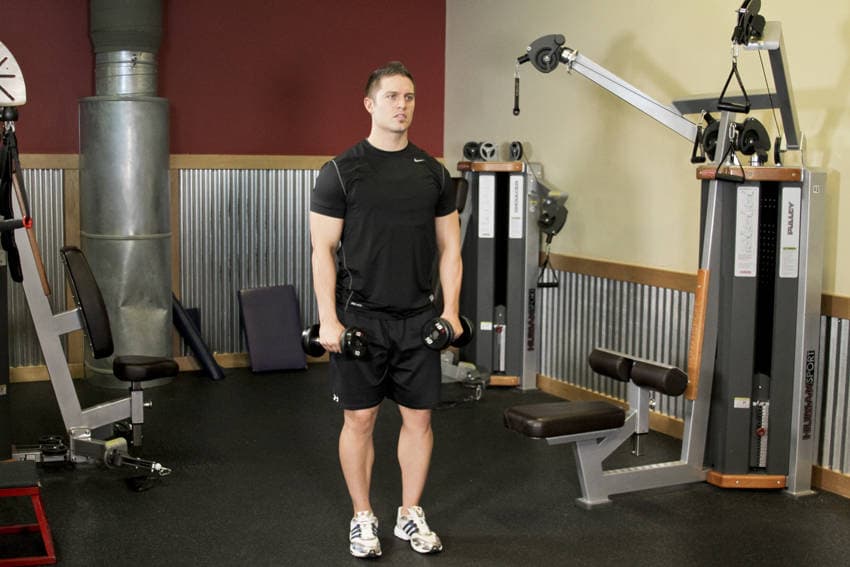
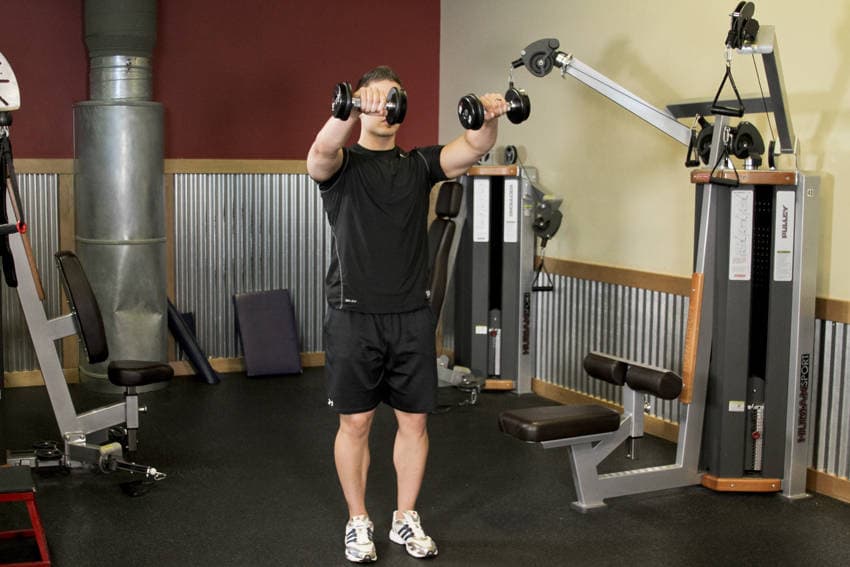


Side-by-Side
Muscle Analysis
Shared
Only in Leverage Shoulder Press
Instructions
Alternating Deltoid Raise
In a standing position, hold a pair of dumbbells at your side.
Keeping your elbows slightly bent, raise the weights directly in front of you to shoulder height, avoiding any swinging or cheating.
Return the weights to your side.
On the next repetition, raise the weights laterally, raising them out to your side to about shoulder height.
Return the weights to the starting position and continue alternating to the front and side.
Leverage Shoulder Press
Load an appropriate weight onto the pins and adjust the seat for your height. The handles should be near the top of the shoulders at the beginning of the motion. Your chest and head should be up and handles held with a pronated grip. This will be your starting position.
Press the handles upward by extending through the elbow.
After a brief pause at the top, return the weight to just above the start position, keeping tension on the muscles by not returning the weight to the stops until the set is complete.
Verdict
Both exercises target the shoulders. Alternating Deltoid Raise is a beginner exercise using dumbbell, while Leverage Shoulder Press is beginner and uses machine. Choose Alternating Deltoid Raise if you have access to dumbbell, or Leverage Shoulder Press if you prefer machine. Leverage Shoulder Press is a compound movement working multiple joints, making it better for overall strength. Alternating Deltoid Raise isolates the target muscle for focused development.