Exercise Comparison
Alternating Kettlebell Press vs Front Plate Raise
Side-by-Side
Muscle Analysis
Shared
Only in Alternating Kettlebell Press
Instructions
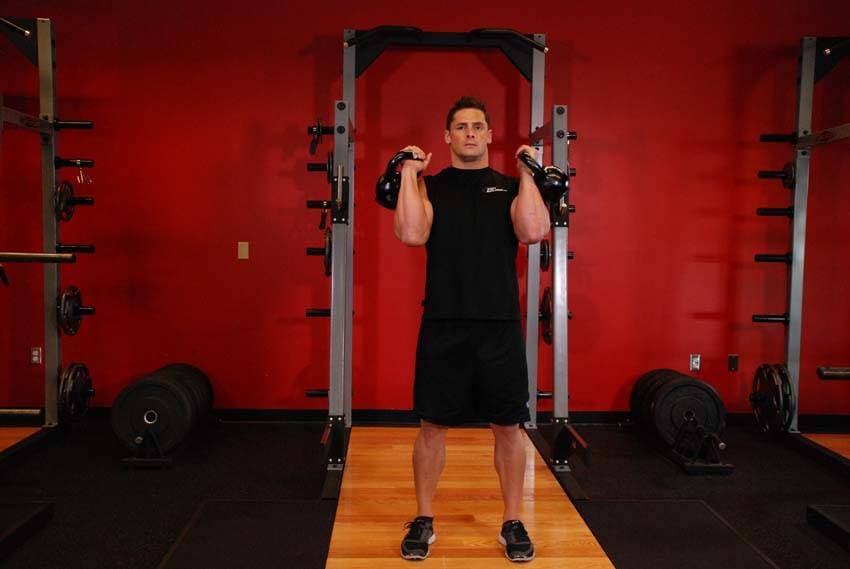
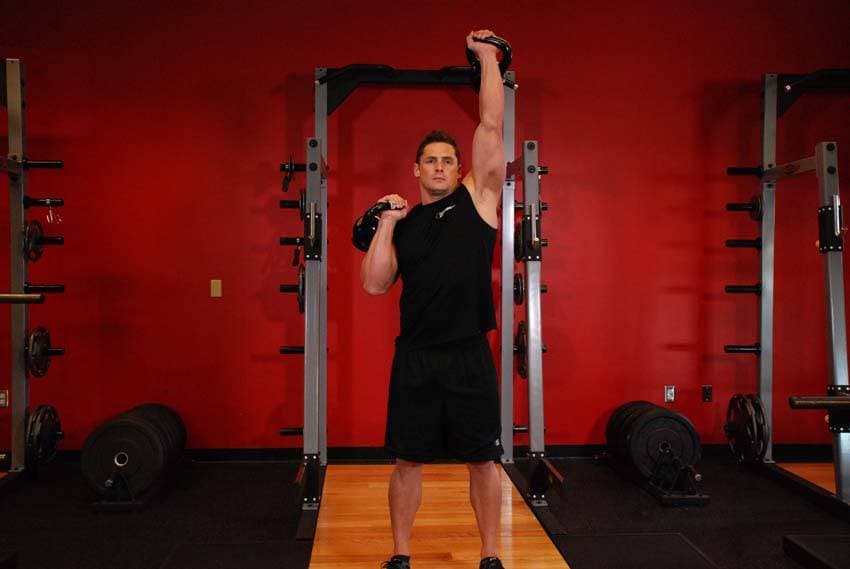
Alternating Kettlebell Press
Clean two kettlebells to your shoulders. Clean the kettlebells to your shoulders by extending through the legs and hips as you pull the kettlebells towards your shoulders. Rotate your wrists as you do so.
Press one directly overhead by extending through the elbow, turning it so the palm faces forward while holding the other kettlebell stationary .
Lower the pressed kettlebell to the starting position and immediately press with your other arm.
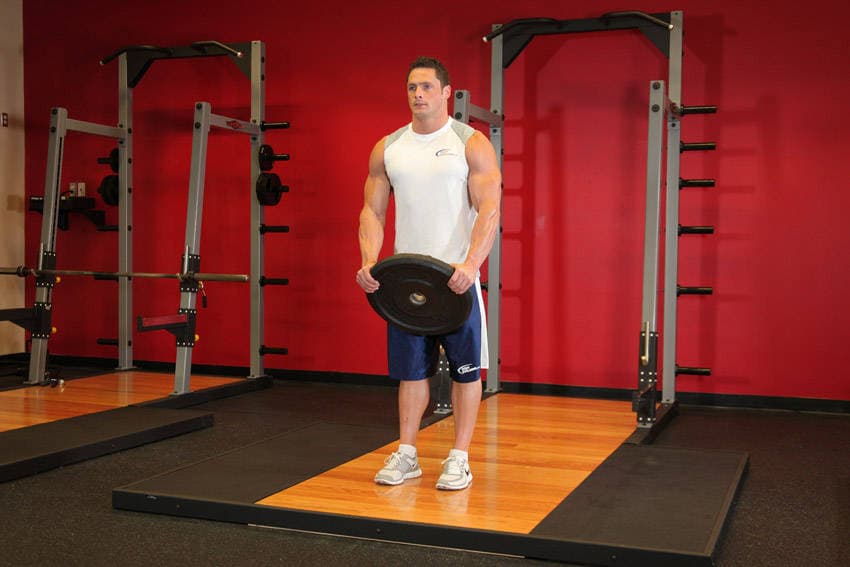
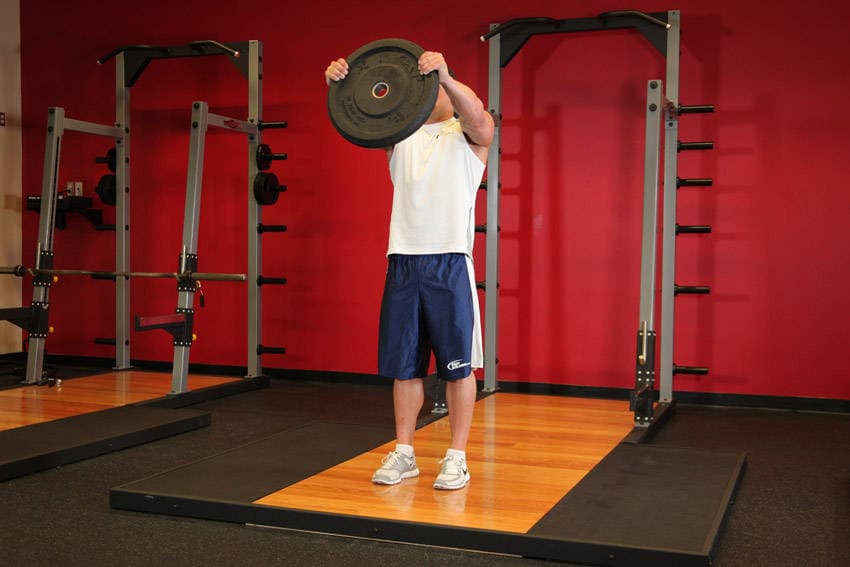
Front Plate Raise
While standing straight, hold a barbell plate in both hands at the 3 and 9 o'clock positions. Your palms should be facing each other and your arms should be extended and locked with a slight bend at the elbows and the plate should be down near your waist in front of you as far as you can go. Tip: The arms will remain in this position throughout the exercise. This will be your starting position.
Slowly raise the plate as you exhale until it is a little above shoulder level. Hold the contraction for a second. Tip: make sure that you do not swing the weight or bend at the elbows. Your torso should remain stationary throughout the movement as well.
As you inhale, slowly lower the plate back down to the starting position.
Repeat for the recommended amount of repetitions.
Verdict
Both exercises target the shoulders. Alternating Kettlebell Press is a intermediate exercise using kettlebells, while Front Plate Raise is intermediate and uses other. Choose Alternating Kettlebell Press if you have access to kettlebells, or Front Plate Raise if you prefer other. Alternating Kettlebell Press is a compound movement working multiple joints, making it better for overall strength. Front Plate Raise isolates the target muscle for focused development.