Exercise Comparison
Anti-Gravity Press vs Dumbbell Lying Rear Lateral Raise


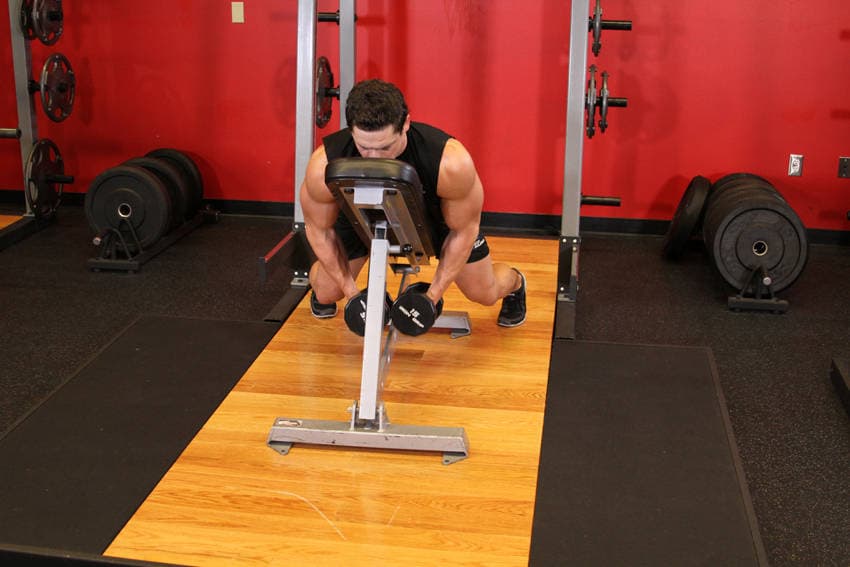
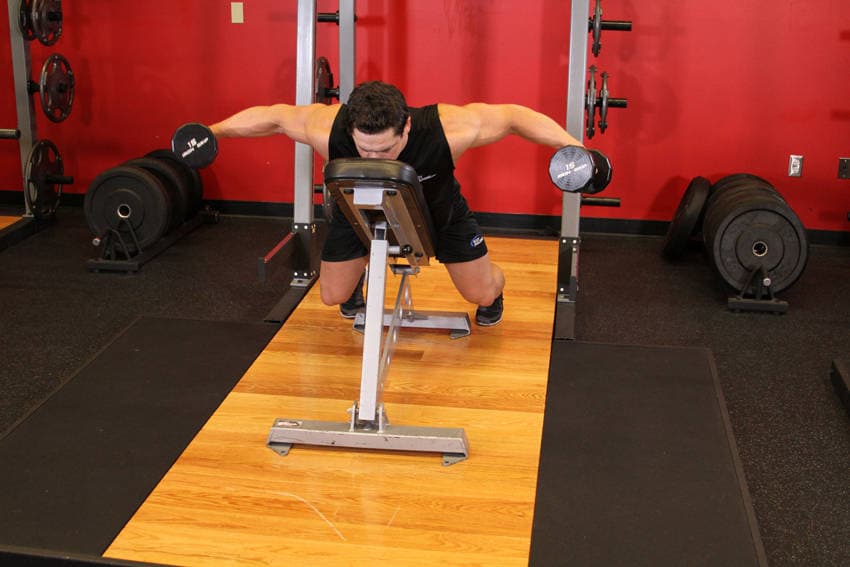
Side-by-Side
Muscle Analysis
Shared
Only in Anti-Gravity Press
Instructions
Anti-Gravity Press
Place a bar on the ground behind the head of an incline bench.
Lay on the bench face down. With a pronated grip, pick the barbell up from the floor. Flex the elbows, performing a reverse curl to bring the bar near your chest. This will be your starting position.
To begin, press the barbell out in front of your head by extending your elbows. Keep your arms parallel to the ground throughout the movement.
Return to the starting position and repeat to complete the set.
Dumbbell Lying Rear Lateral Raise
While holding a dumbbell in each hand, lay with your chest down on a slightly inclined (around 15 degrees when measured from the floor) adjustable bench.
Position the palms of the hands in a neutral manner (palms facing your torso) as you keep the arms extended with the elbows slightly bent. This will be your starting position.
Now raise the arms to the side until your elbows are at shoulder height and your arms are roughly parallel to the floor as you exhale. Tip: Maintain your arms perpendicular to the torso while keeping them extended throughout the movement. Also, keep the contraction at the top for a second.
Slowly lower the dumbbells to the starting position as you inhale.
Repeat for the recommended amount of repetitions and then switch to the other arm.
Verdict
Both exercises target the shoulders. Anti-Gravity Press is a beginner exercise using barbell, while Dumbbell Lying Rear Lateral Raise is intermediate and uses dumbbell. Choose Anti-Gravity Press if you're looking for a more accessible option, or Dumbbell Lying Rear Lateral Raise for a greater challenge. Anti-Gravity Press is a compound movement working multiple joints, making it better for overall strength. Dumbbell Lying Rear Lateral Raise isolates the target muscle for focused development.