Exercise Comparison
Backward Drag vs Dumbbell Rear Lunge
Side-by-Side
Muscle Analysis
Shared
Only in Backward Drag
Instructions
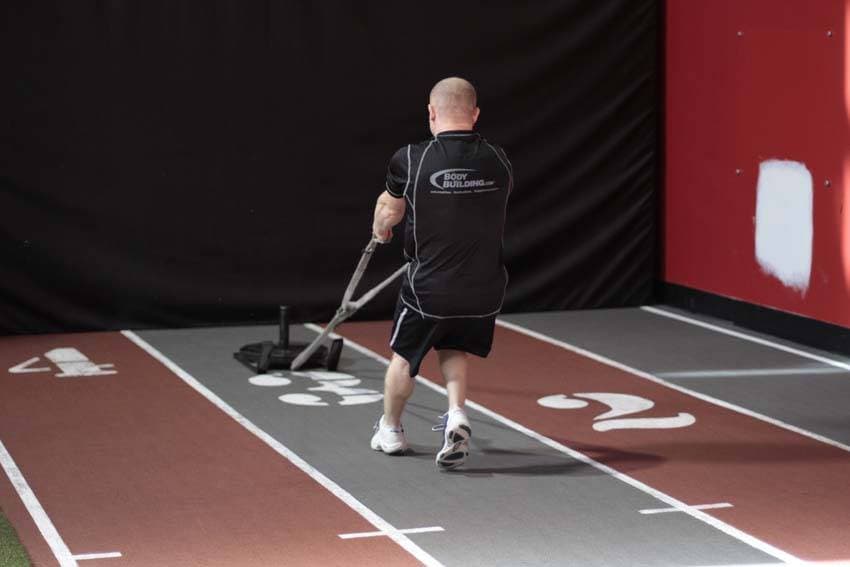
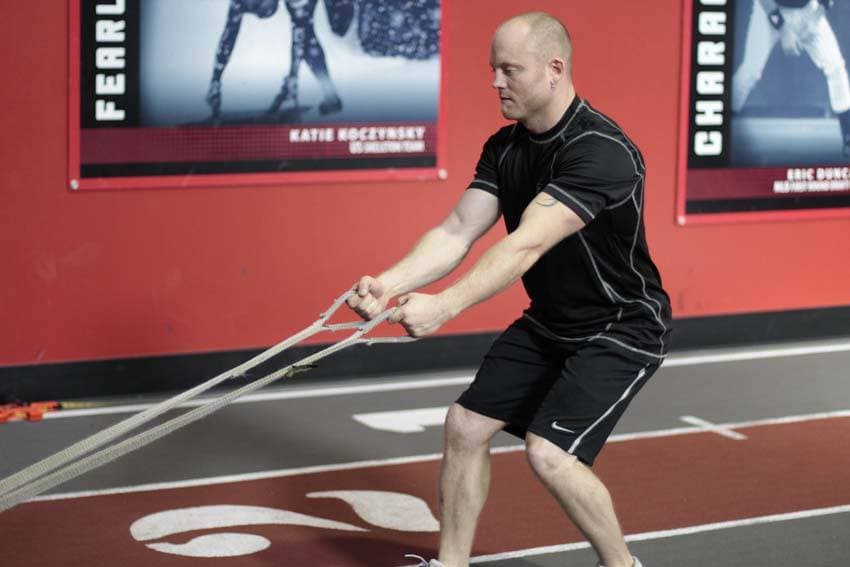
Backward Drag
Load a sled with the desired weight, attaching a rope or straps to the sled that you can hold onto.
Begin the exercise by moving backwards for a given distance. Leaning back, extend through the legs for short steps to move as quickly as possible.
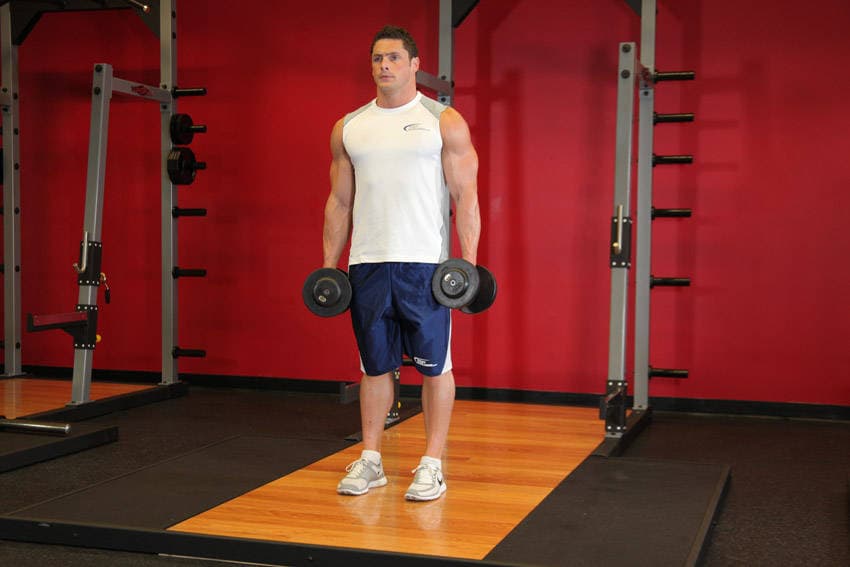
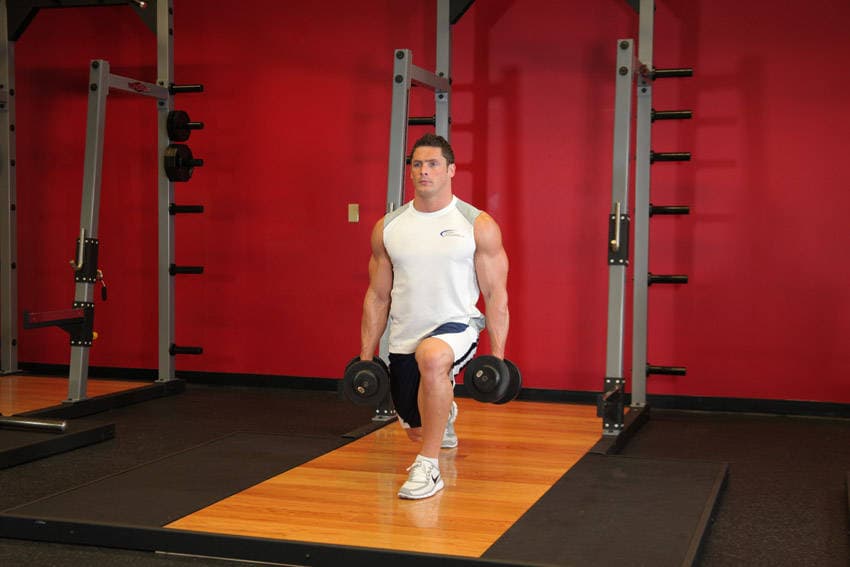
Dumbbell Rear Lunge
Stand with your torso upright holding two dumbbells in your hands by your sides. This will be your starting position.
Step backward with your right leg around two feet or so from the left foot and lower your upper body down, while keeping the torso upright and maintaining balance. Inhale as you go down. Tip: As in the other exercises, do not allow your knee to go forward beyond your toes as you come down, as this will put undue stress on the knee joint. Make sure that you keep your front shin perpendicular to the ground. Keep the torso upright during the lunge; flexible hip flexors are important. A long lunge emphasizes the Gluteus Maximus; a short lunge emphasizes Quadriceps.
Push up and go back to the starting position as you exhale. Tip: Use the ball of your feet to push in order to accentuate the quadriceps. To focus on the glutes, press with your heels.
Now repeat with the opposite leg.
Verdict
Both exercises target the quadriceps. Backward Drag is a beginner exercise using other, while Dumbbell Rear Lunge is intermediate and uses dumbbell. Choose Backward Drag if you're looking for a more accessible option, or Dumbbell Rear Lunge for a greater challenge.