Exercise Comparison
Backward Drag vs Speed Squats
Side-by-Side
Muscle Analysis
Shared
Only in Backward Drag
Instructions
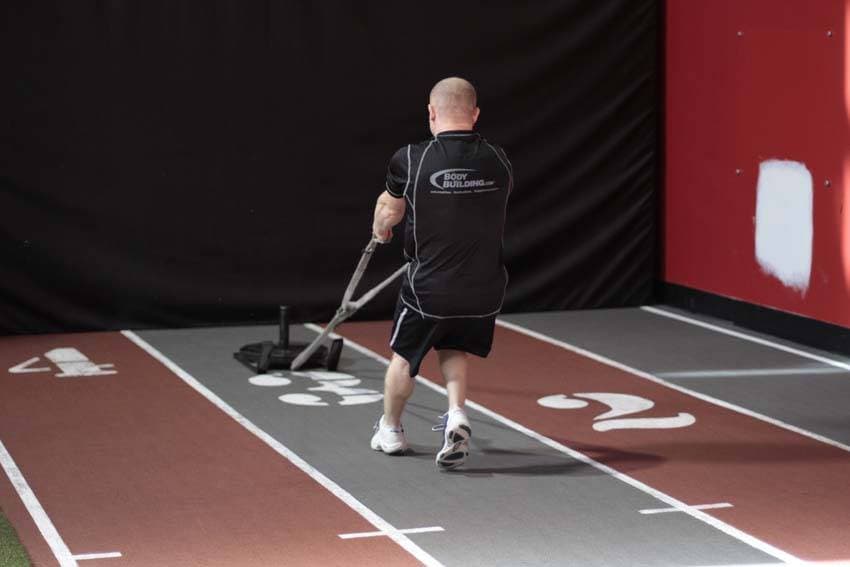
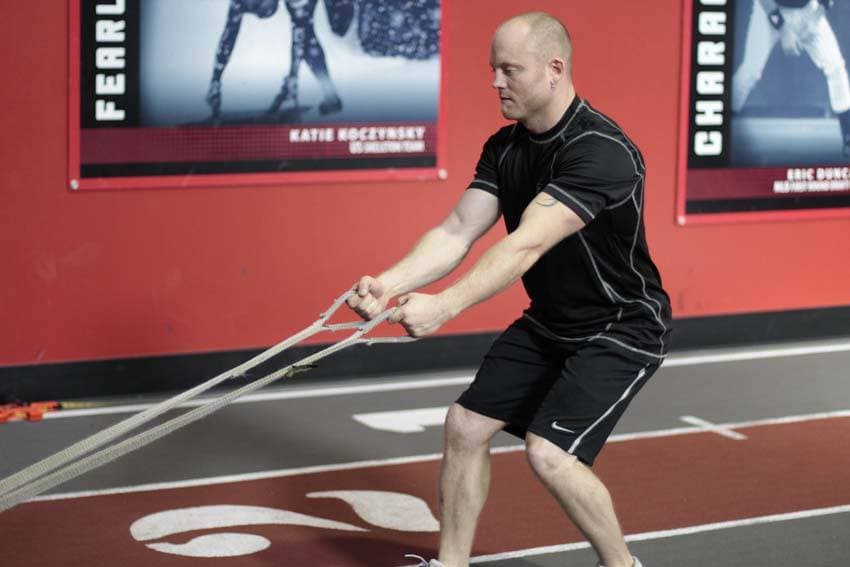
Backward Drag
Load a sled with the desired weight, attaching a rope or straps to the sled that you can hold onto.
Begin the exercise by moving backwards for a given distance. Leaning back, extend through the legs for short steps to move as quickly as possible.
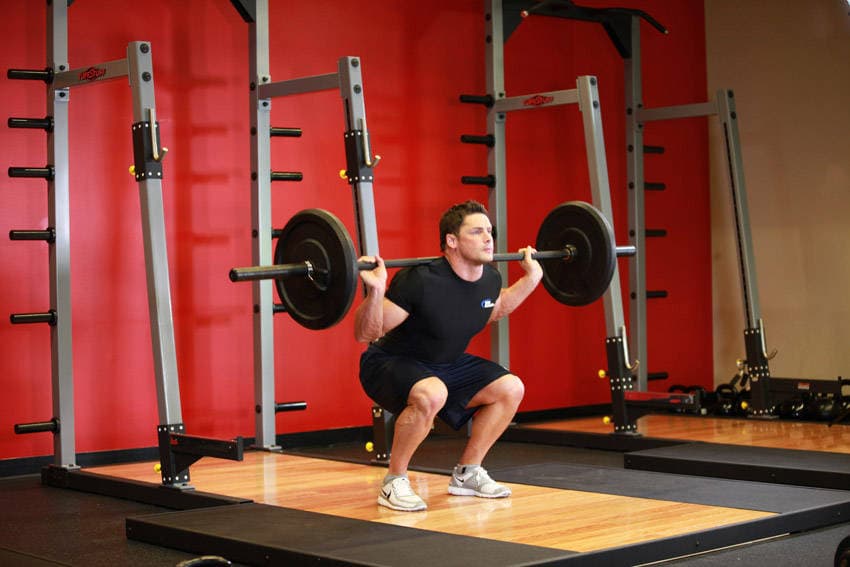
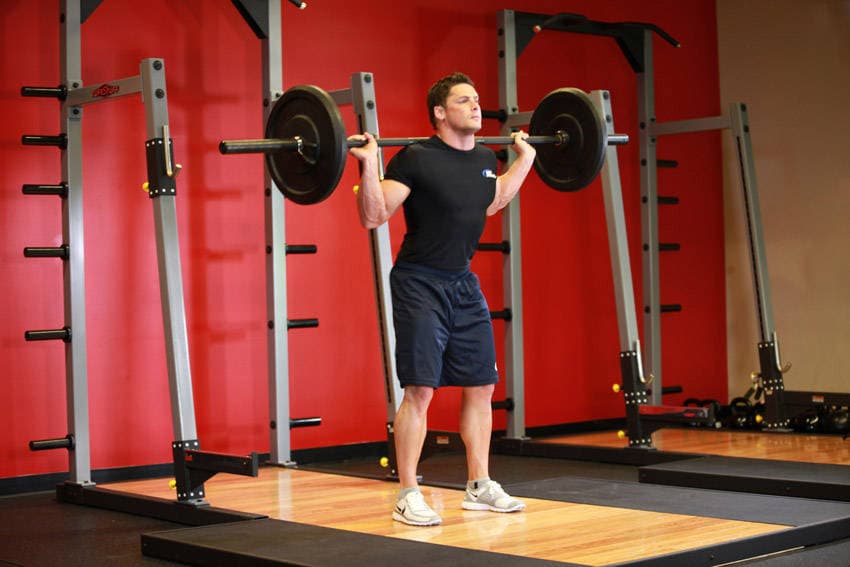
Speed Squats
This exercise is best performed inside a squat rack for safety purposes. To begin, first set the bar on a rack that best matches your height. Once the correct height is chosen and the bar is loaded, step under the bar and place the back of your shoulders (slightly below the neck) across it.
Hold on to the bar using both arms at each side and lift it off the rack by first pushing with your legs and at the same time straightening your torso.
Step away from the rack and position your legs using a shoulder width medium stance with the toes slightly pointed out. Keep your head up at all times as looking down will get you off balance and also maintain a straight back. This will be your starting position. (Note: For the purposes of this discussion we will use the medium stance which targets overall development; however you can choose any of the three stances discussed in the foot stances section).
Begin to lower the bar by bending the knees as you maintain a straight posture with the head up. Continue down until the angle between the upper leg and the calves becomes slightly less than 90-degrees (which is the point in which the upper legs are below parallel to the floor). Inhale as you perform this portion of the movement. Tip: If you performed the exercise correctly, the front of the knees should make an imaginary straight line with the toes that is perpendicular to the front. If your knees are past that imaginary line (if they are past your toes) then you are placing undue stress on the knee and the exercise has been performed incorrectly.
Begin to raise the bar as fast as possible without involving momentum as you exhale by pushing the floor with the heel of your foot mainly as you straighten the legs again and go back to the starting position. Note: You should perform these exercises as fast as possible but without breaking perfect form and without involving momentum.
Repeat for the recommended amount of repetitions.
Verdict
Both exercises target the quadriceps. Backward Drag is a beginner exercise using other, while Speed Squats is expert and uses barbell. Choose Backward Drag if you're looking for a more accessible option, or Speed Squats for a greater challenge.