Exercise Comparison
Band Skull Crusher vs Parallel Bar Dip
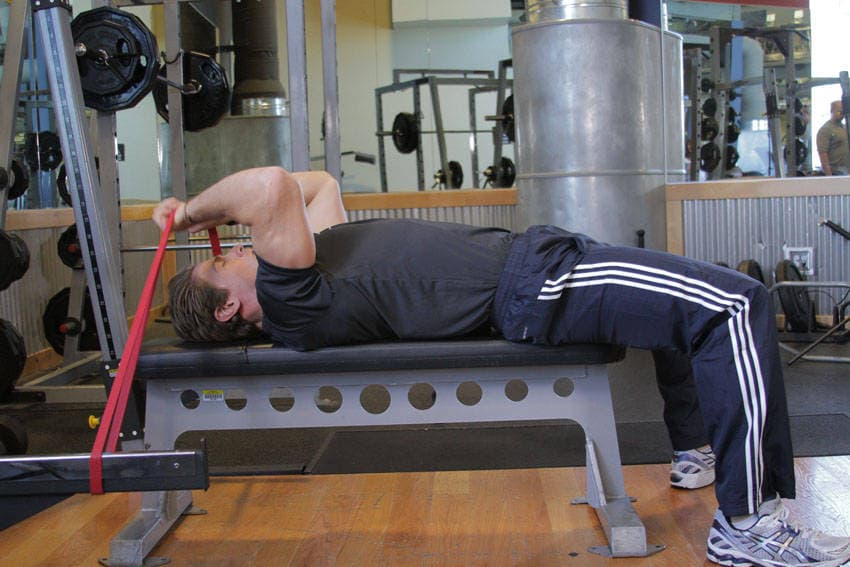
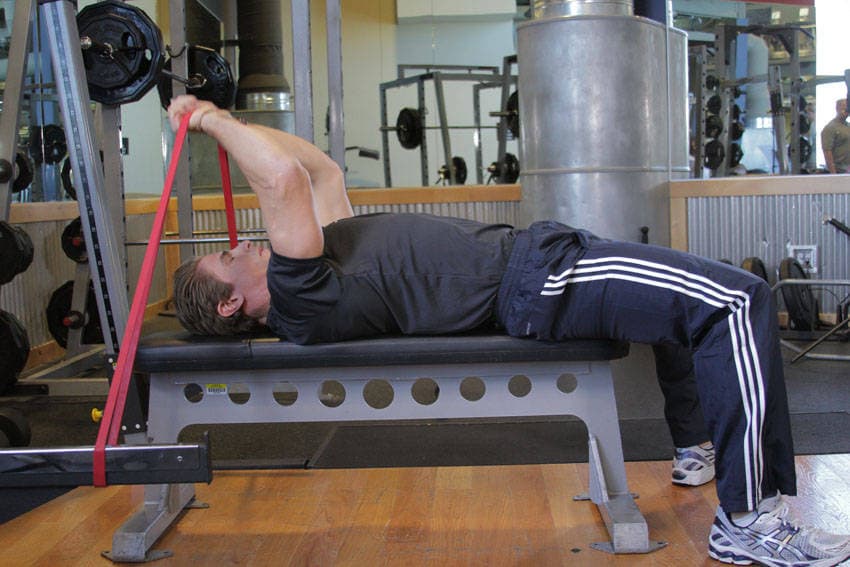
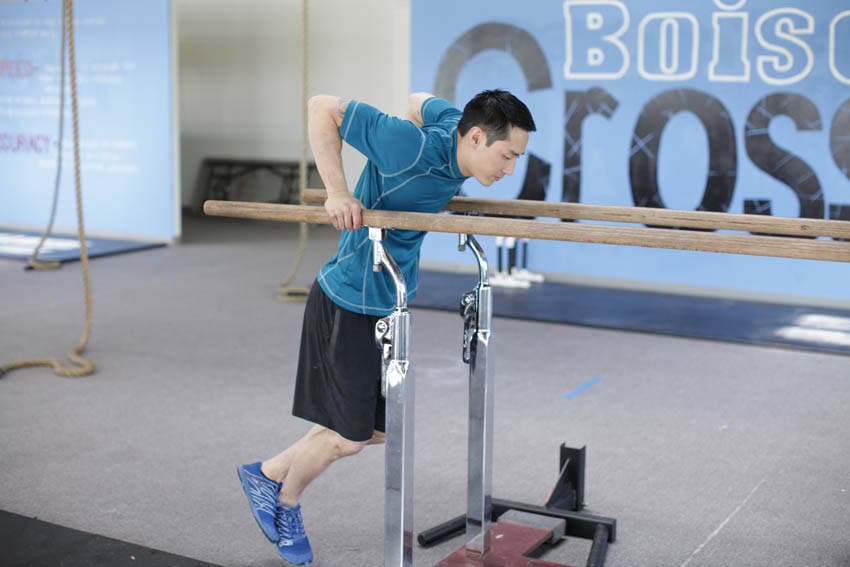
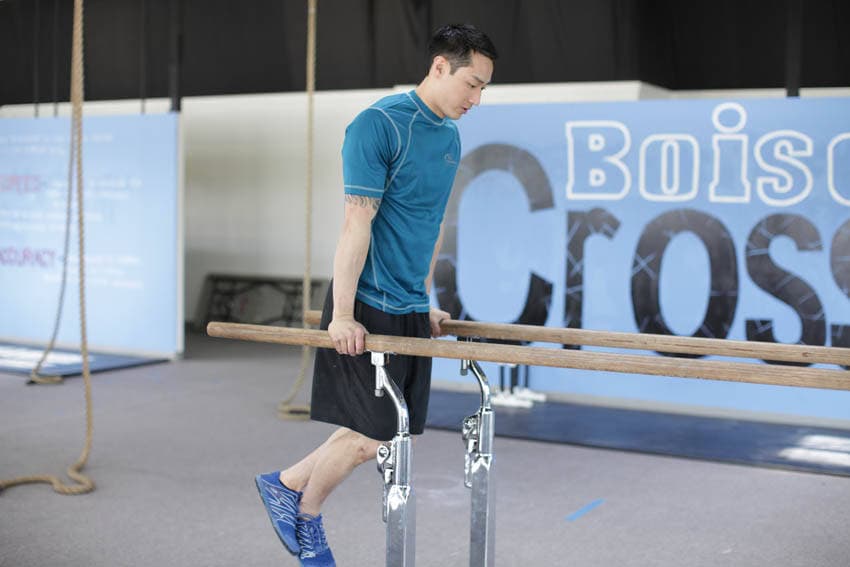
Side-by-Side
Muscle Analysis
Shared
Only in Parallel Bar Dip
Instructions
Band Skull Crusher
Secure a band to the base of a rack or the bench. Lay on the bench so that the band is lined up with your head.
Take hold of the band, raising your elbows so that the upper arm is perpendicular to the floor. With the elbow flexed, the band should be above your head. This will be your starting position.
Extend through the elbow to straighten your arm, keeping your upper arm in place. Pause at the top of the motion, and return to the starting position.
Parallel Bar Dip
Stand between a set of parallel bars. Place a hand on each bar, and then take a small jump to help you get into the starting position with your arms locked out.
Begin by flexing the elbow, lowering your body until your arms break 90 degrees. Avoid swinging, and maintain good posture throughout the descent.
Reverse the motion by extending the elbow, pushing yourself back up into the starting position.
Repeat for the desired number of repetitions.
Verdict
Both exercises target the triceps. Band Skull Crusher is a beginner exercise using bands, while Parallel Bar Dip is beginner and uses other. Choose Band Skull Crusher if you have access to bands, or Parallel Bar Dip if you prefer other. Parallel Bar Dip is a compound movement working multiple joints, making it better for overall strength. Band Skull Crusher isolates the target muscle for focused development.