Exercise Comparison
Barbell Glute Bridge vs One-Legged Cable Kickback
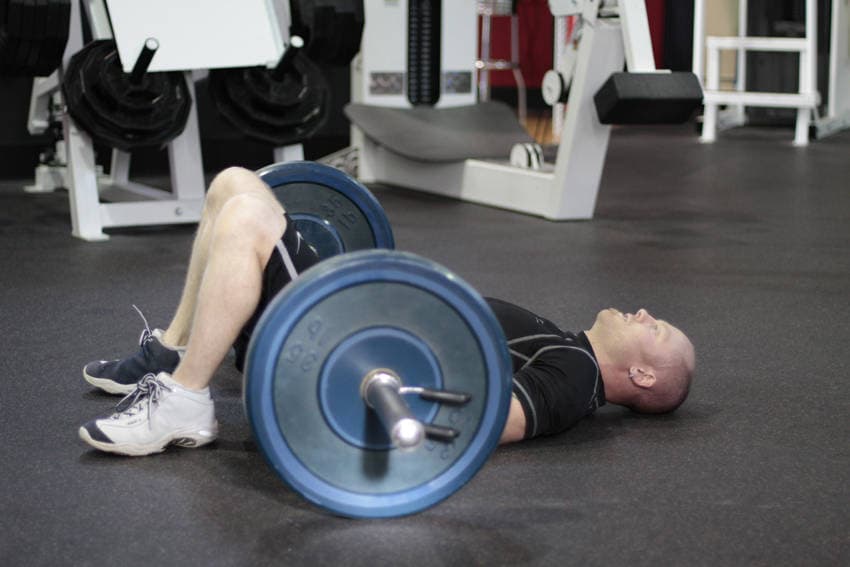
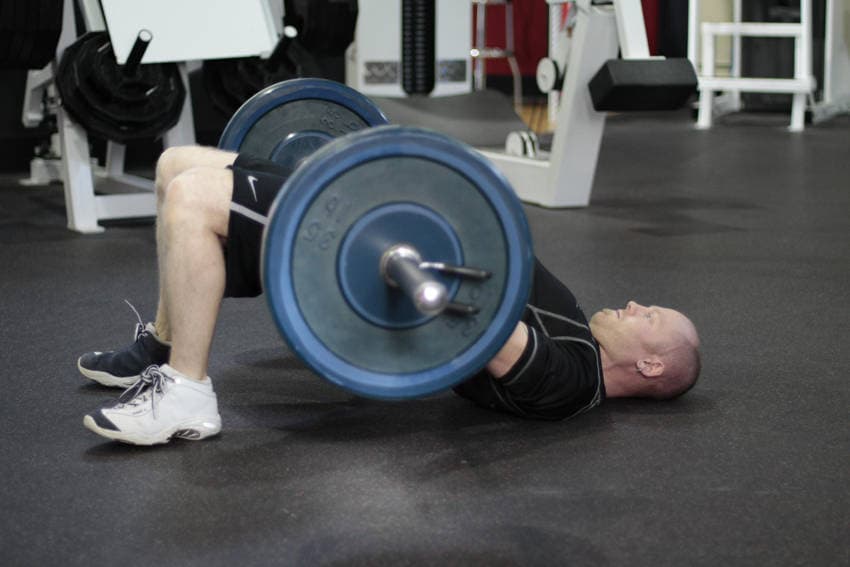
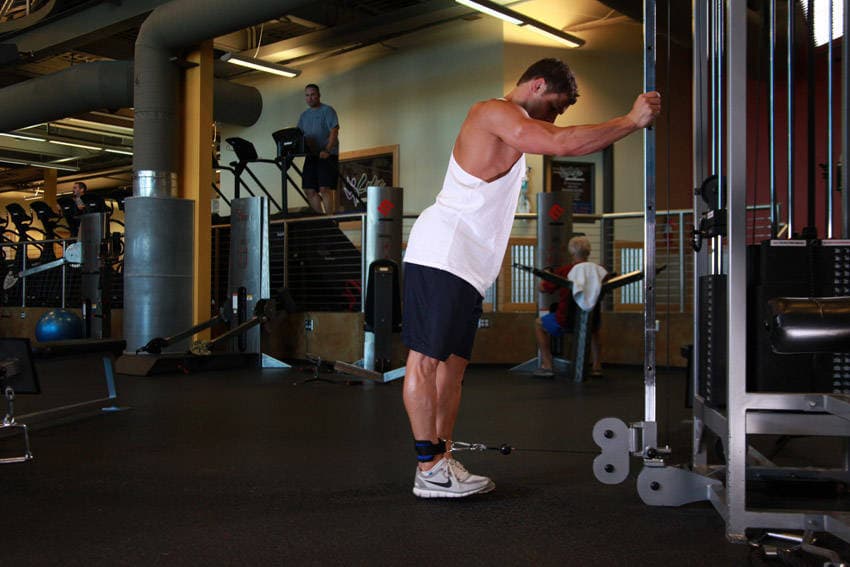
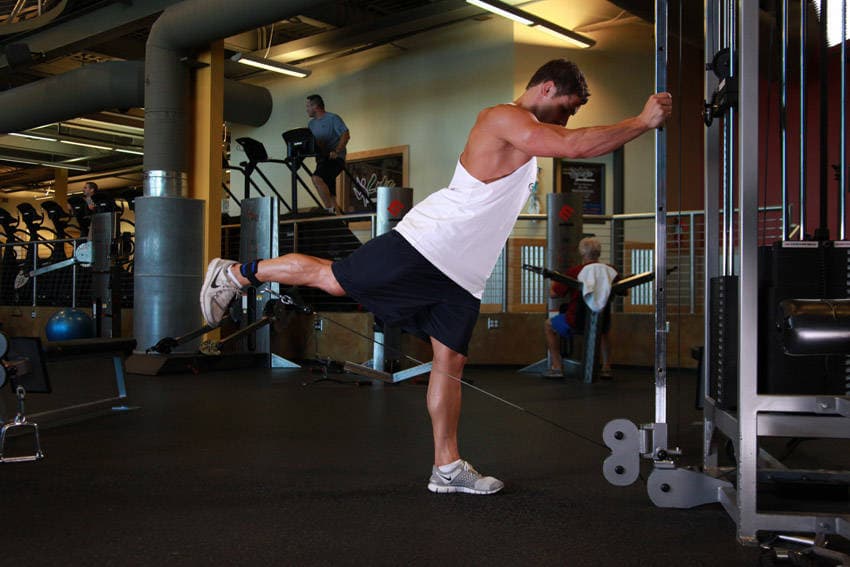
Side-by-Side
Muscle Analysis
Shared
Only in Barbell Glute Bridge
Instructions
Barbell Glute Bridge
Begin seated on the ground with a loaded barbell over your legs. Using a fat bar or having a pad on the bar can greatly reduce the discomfort caused by this exercise. Roll the bar so that it is directly above your hips, and lay down flat on the floor.
Begin the movement by driving through with your heels, extending your hips vertically through the bar. Your weight should be supported by your upper back and the heels of your feet.
Extend as far as possible, then reverse the motion to return to the starting position.
One-Legged Cable Kickback
Hook a leather ankle cuff to a low cable pulley and then attach the cuff to your ankle.
Face the weight stack from a distance of about two feet, grasping the steel frame for support.
While keeping your knees and hips bent slightly and your abs tight, contract your glutes to slowly "kick" the working leg back in a semicircular arc as high as it will comfortably go as you breathe out. Tip: At full extension, squeeze your glutes for a second in order to achieve a peak contraction.
Now slowly bring your working leg forward, resisting the pull of the cable until you reach the starting position.
Repeat for the recommended amount of repetitions.
Switch legs and repeat the movement for the other side.
Verdict
Both exercises target the glutes. Barbell Glute Bridge is a intermediate exercise using barbell, while One-Legged Cable Kickback is intermediate and uses cable. Choose Barbell Glute Bridge if you have access to barbell, or One-Legged Cable Kickback if you prefer cable. Barbell Glute Bridge is a compound movement working multiple joints, making it better for overall strength. One-Legged Cable Kickback isolates the target muscle for focused development.