Exercise Comparison
Dumbbell Lying Pronation vs Wrist Rotations with Straight Bar
Side-by-Side
Muscle Analysis
Shared
Instructions
Dumbbell Lying Pronation
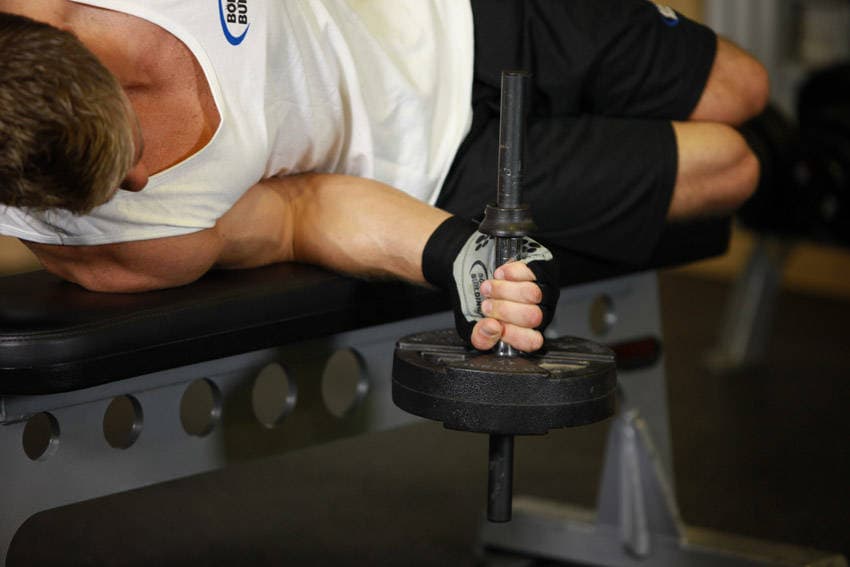
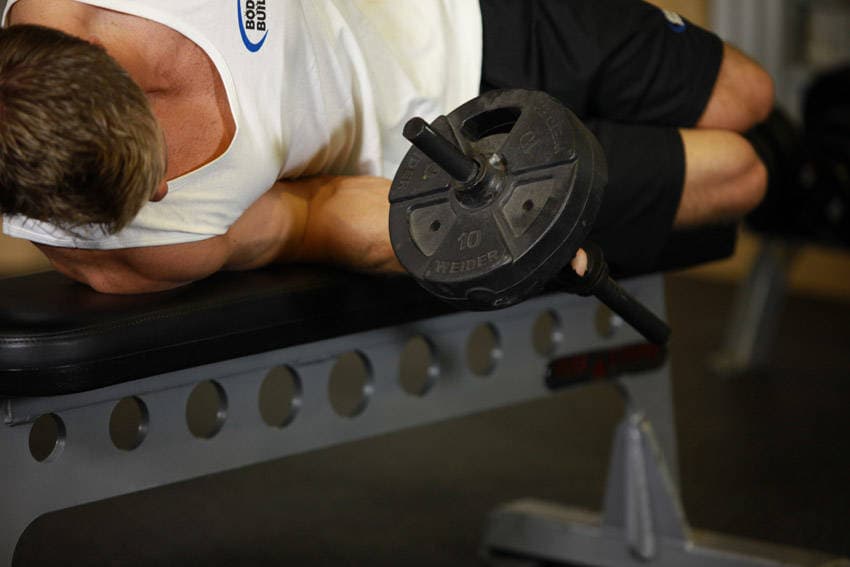
Lie on a flat bench face down with one arm holding a dumbbell and the other hand on top of the bench folded so that you can rest your head on it.
Bend the elbows of the arm holding the dumbbell so that it creates a 90-degree angle between the upper arm and the forearm.
Now raise the upper arm so that the forearm is perpendicular to the floor and the upper arm is perpendicular to your torso. Tip: The upper arm should be parallel to the floor and also creating a 90-degree angle with your torso. This will be your starting position.
As you breathe out, externally rotate your forearm so that the dumbbell is lifted forward as you maintain the 90 degree angle bend between the upper arms and the forearm. You will continue this external rotation until the forearm is parallel to the floor. At this point you will hold the contraction for a second.
As you breathe in, slowly go back to the starting position.
Repeat for the recommended amount of repetitions.
Wrist Rotations with Straight Bar
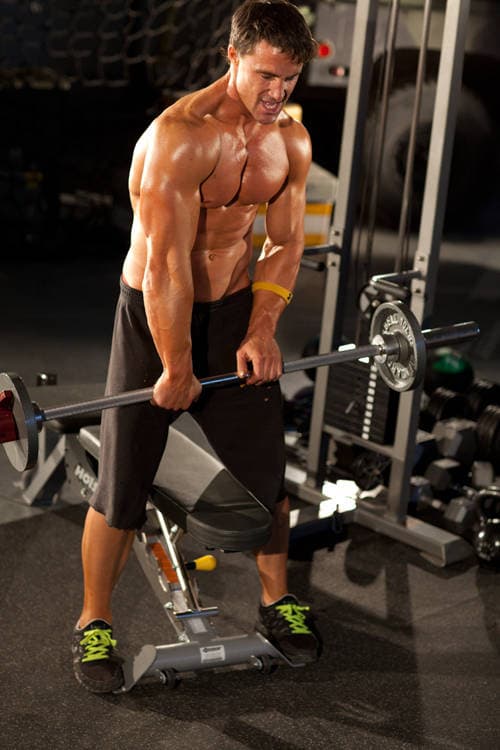
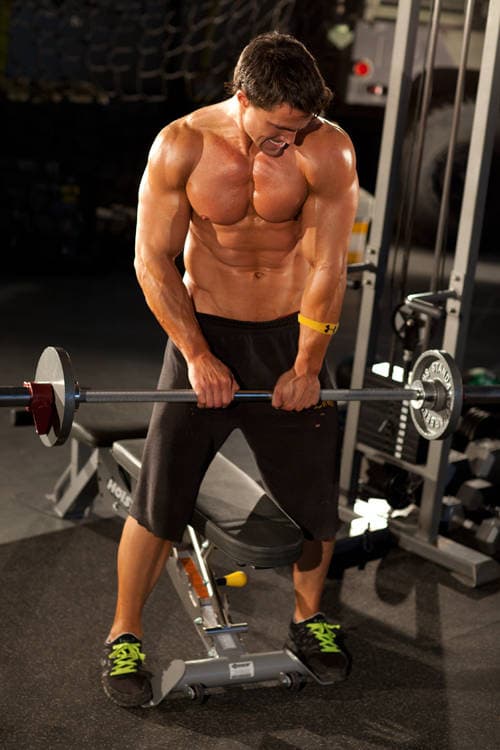
Hold a barbell with both hands and your palms facing down; hands spaced about shoulder width. This will be your starting position.
Alternating between each of your hands, perform the movement by extending the wrist as though you were rolling up a newspaper. Continue alternating back and forth until failure.
Reverse the motion by flexing the wrist, rolling the opposite direction. Continue the alternating motion until failure.
Verdict
Both exercises target the forearms. Dumbbell Lying Pronation is a intermediate exercise using dumbbell, while Wrist Rotations with Straight Bar is beginner and uses barbell. Choose Wrist Rotations with Straight Bar if you're looking for a more accessible option, or Dumbbell Lying Pronation for a greater challenge.