Exercise Comparison
Alternate Leg Diagonal Bound vs Barbell Squat To A Bench
Side-by-Side
Muscle Analysis
Shared
Only in Alternate Leg Diagonal Bound
Only in Barbell Squat To A Bench
Instructions
Alternate Leg Diagonal Bound
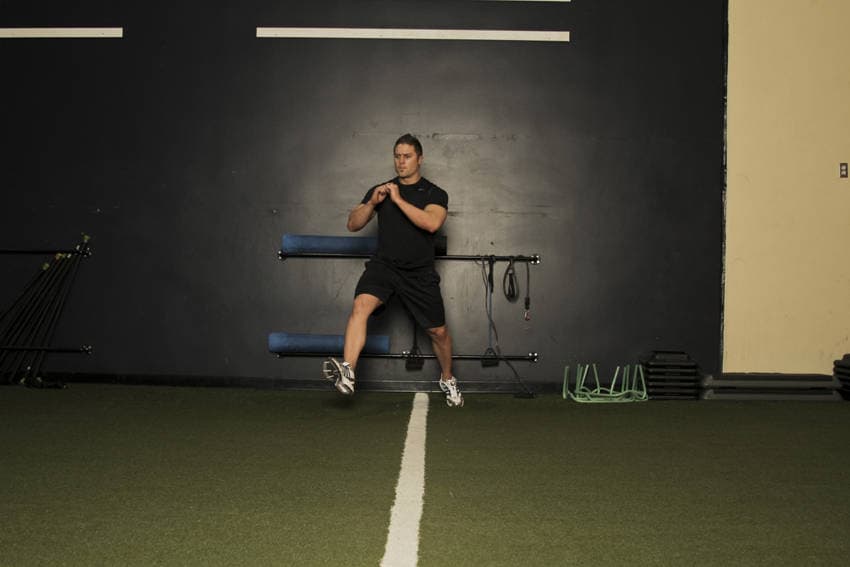
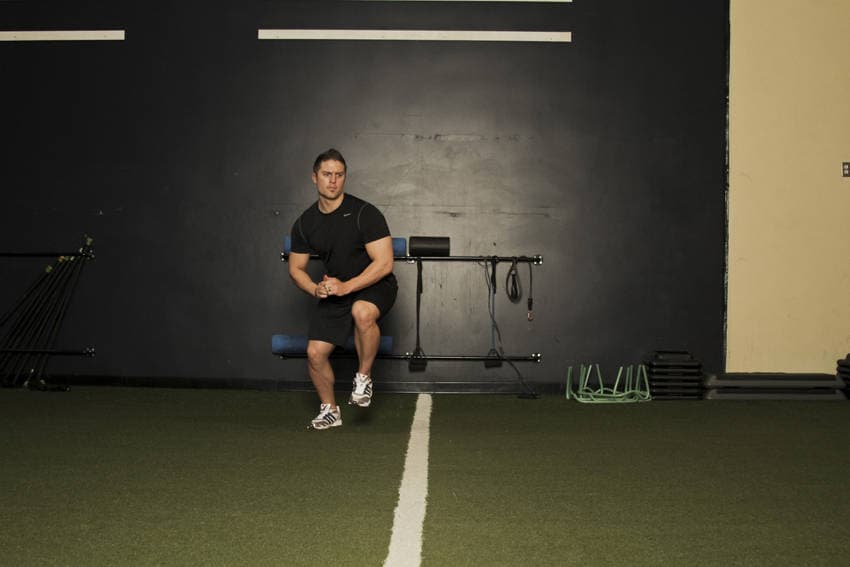
Assume a comfortable stance with one foot slightly in front of the other.
Begin by pushing off with the front leg, driving the opposite knee forward and as high as possible before landing. Attempt to cover as much distance to each side with each bound.
It may help to use a line on the ground to guage distance from side to side.
Repeat the sequence with the other leg.
Barbell Squat To A Bench
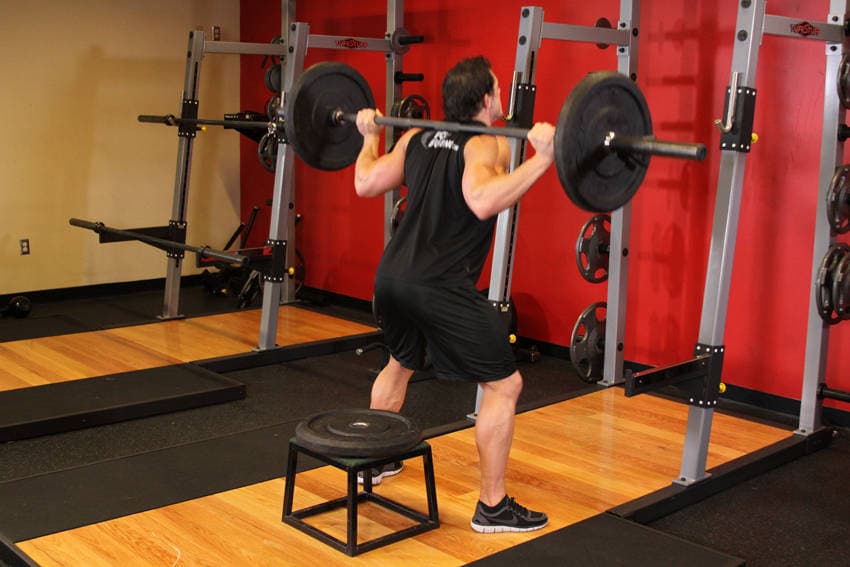
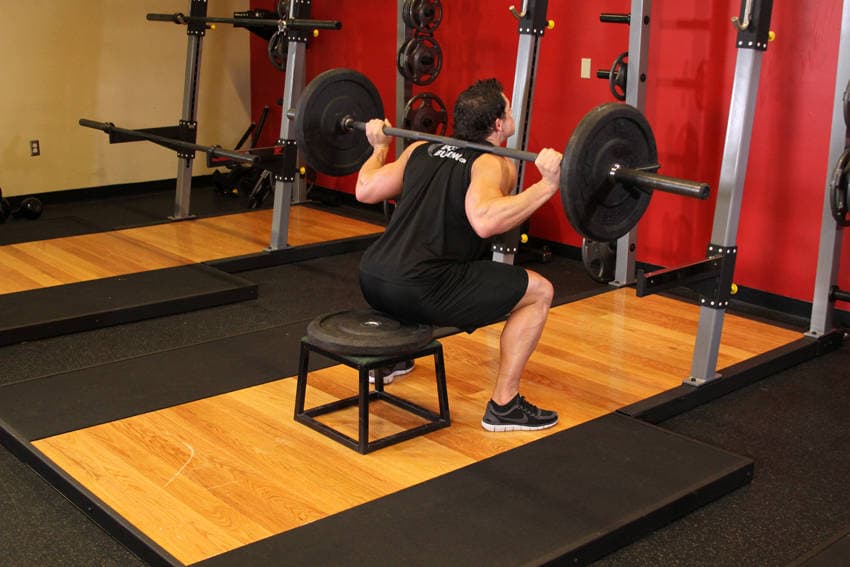
This exercise is best performed inside a squat rack for safety purposes. To begin, first place a flat bench or a box behind you. The flat bench is used to teach you to set your hips back and to hit depth.
Then, set the bar on a rack that best matches your height. Once the correct height is chosen and the bar is loaded, step under the bar and place the back of your shoulders (slightly below the neck) across it.
Hold on to the bar using both arms at each side and lift it off the rack by first pushing with your legs and at the same time straightening your torso.
Step away from the rack and position your legs using a shoulder width medium stance with the toes slightly pointed out. Keep your head up at all times as looking down will get you off balance and also maintain a straight back. This will be your starting position. (Note: For the purposes of this discussion we will use the medium stance described above which targets overall development; however you can choose any of the three stances discussed in the foot stances section).
Begin to slowly lower the bar by bending the knees and sitting your hips back as you maintain a straight posture with the head up. Continue down until you slightly touch the bench behind you. Inhale as you perform this portion of the movement. Tip: If you performed the exercise correctly, the front of the knees should make an imaginary straight line with the toes that is perpendicular to the front. If your knees are past that imaginary line (if they are past your toes) then you are placing undue stress on the knee and the exercise has been performed incorrectly.
Begin to raise the bar as you exhale by pushing the floor with the heel of your foot as you straighten the legs and extend the hips to go back to the starting position.
Repeat for the recommended amount of repetitions.
Verdict
Both exercises target the quadriceps. Alternate Leg Diagonal Bound is a beginner exercise using none, while Barbell Squat To A Bench is expert and uses barbell. Choose Alternate Leg Diagonal Bound if you're looking for a more accessible option, or Barbell Squat To A Bench for a greater challenge.