Exercise Comparison
Alternate Leg Diagonal Bound vs Cable Hip Adduction
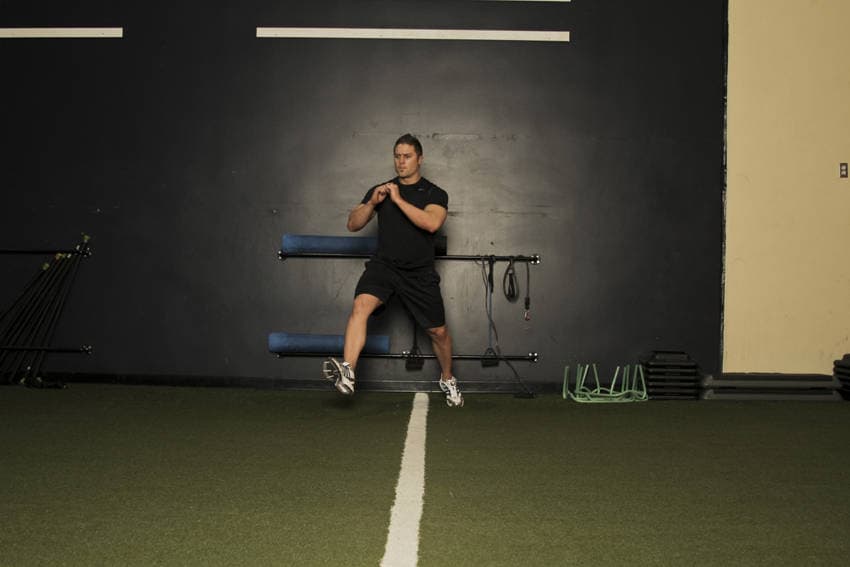
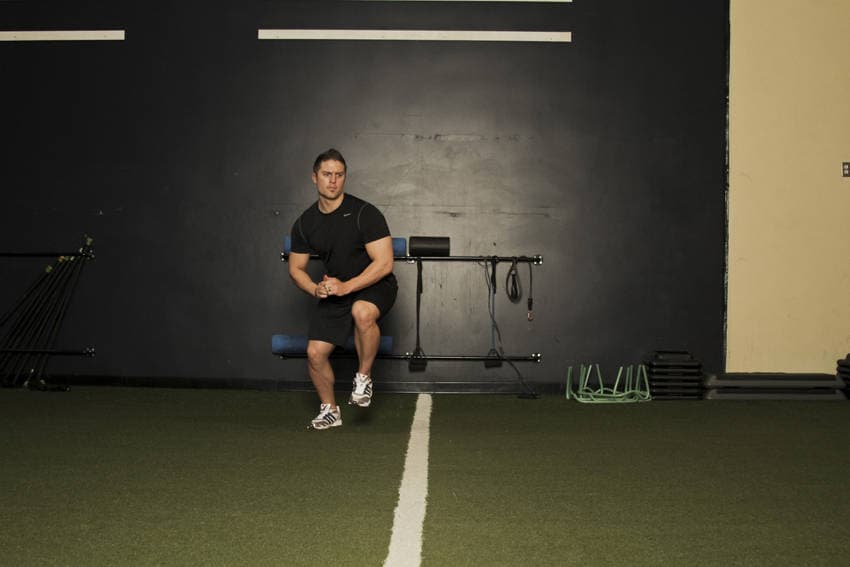
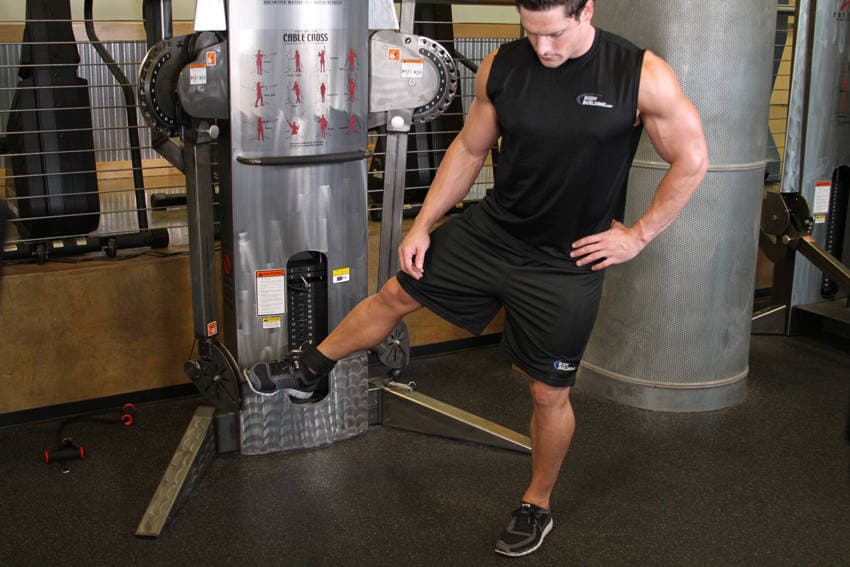
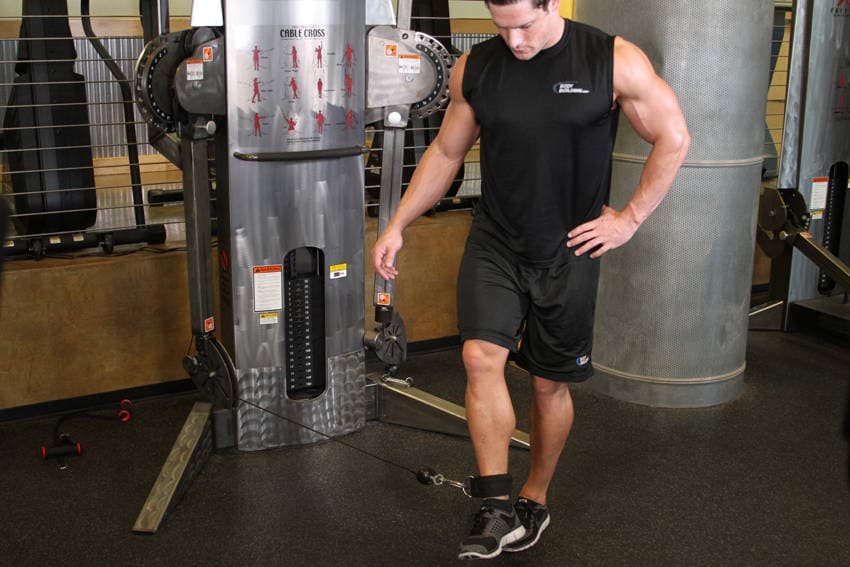
Side-by-Side
Muscle Analysis
Shared
Only in Alternate Leg Diagonal Bound
Instructions
Alternate Leg Diagonal Bound
Assume a comfortable stance with one foot slightly in front of the other.
Begin by pushing off with the front leg, driving the opposite knee forward and as high as possible before landing. Attempt to cover as much distance to each side with each bound.
It may help to use a line on the ground to guage distance from side to side.
Repeat the sequence with the other leg.
Cable Hip Adduction
Stand in front of a low pulley facing forward with one leg next to the pulley and the other one away.
Attach the ankle cuff to the cable and also to the ankle of the leg that is next to the pulley.
Now step out and away from the stack with a wide stance and grasp the bar of the pulley system.
Stand on the foot that does not have the ankle cuff (the far foot) and allow the leg with the cuff to be pulled towards the low pulley. This will be your starting position.
Now perform the movement by moving the leg with the ankle cuff in front of the far leg by using the inner thighs to abduct the hip. Breathe out during this portion of the movement.
Slowly return to the starting position as you breathe in.
Repeat for the recommended amount of repetitions and then repeat the same movement with the opposite leg.
Verdict
Both exercises target the quadriceps. Alternate Leg Diagonal Bound is a beginner exercise using none, while Cable Hip Adduction is beginner and uses cable. Choose Alternate Leg Diagonal Bound if you have access to none, or Cable Hip Adduction if you prefer cable. Alternate Leg Diagonal Bound is a compound movement working multiple joints, making it better for overall strength. Cable Hip Adduction isolates the target muscle for focused development.