Exercise Comparison
Alternate Leg Diagonal Bound vs Rowing, Stationary
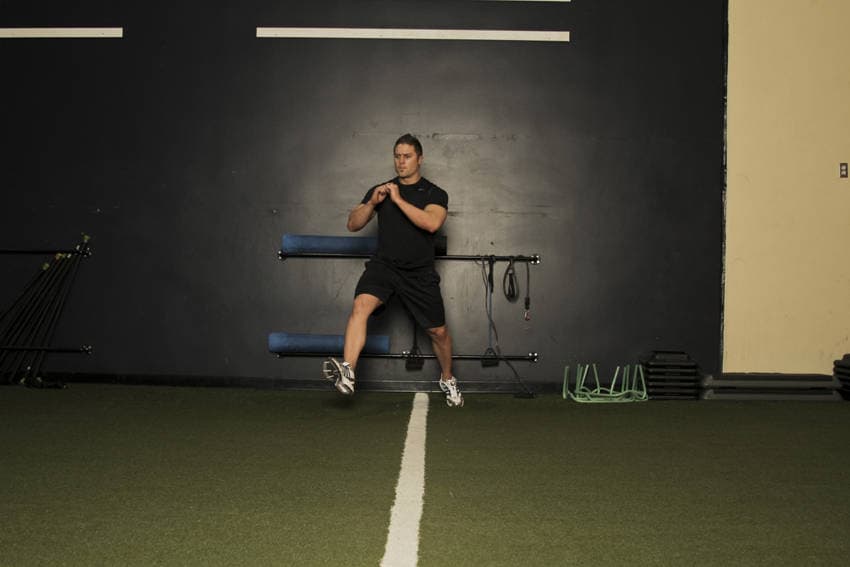
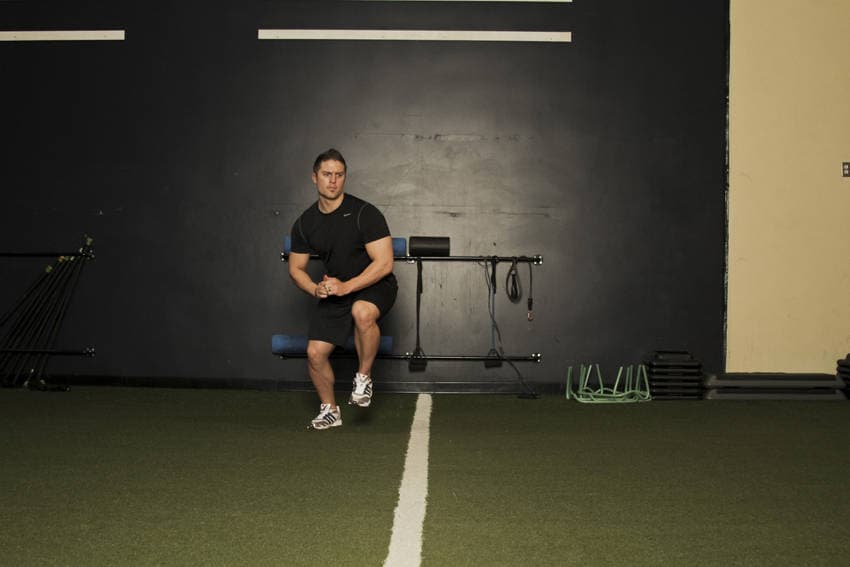
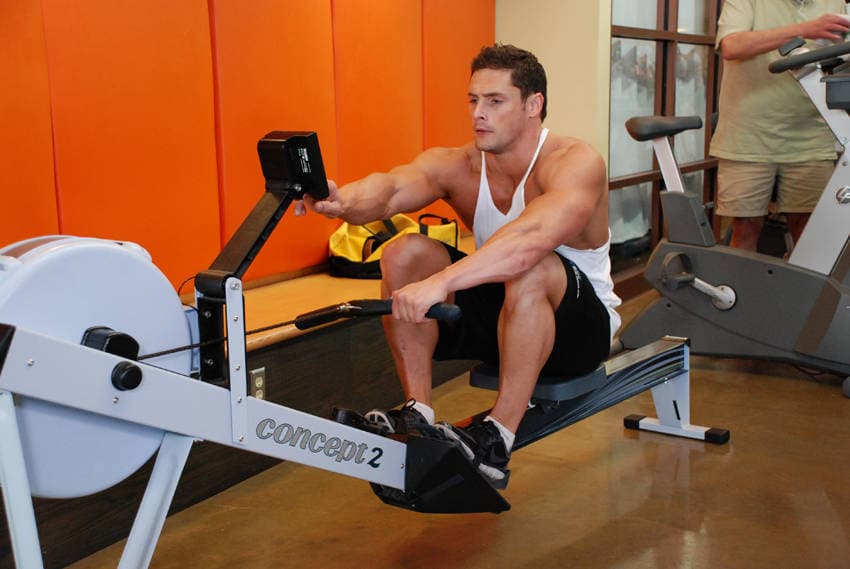
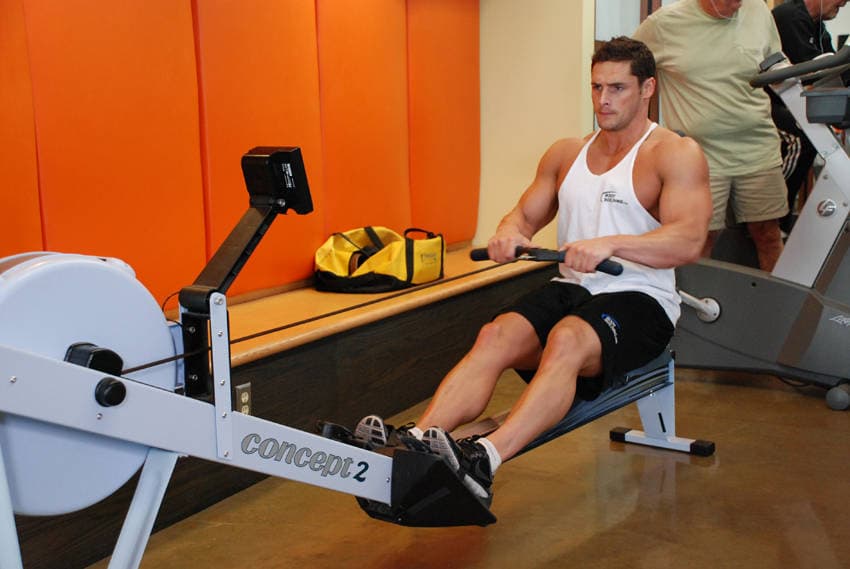
Side-by-Side
Muscle Analysis
Shared
Only in Alternate Leg Diagonal Bound
Only in Rowing, Stationary
Instructions
Alternate Leg Diagonal Bound
Assume a comfortable stance with one foot slightly in front of the other.
Begin by pushing off with the front leg, driving the opposite knee forward and as high as possible before landing. Attempt to cover as much distance to each side with each bound.
It may help to use a line on the ground to guage distance from side to side.
Repeat the sequence with the other leg.
Rowing, Stationary
To begin, seat yourself on the rower. Make sure that your heels are resting comfortably against the base of the foot pedals and that the straps are secured. Select the program that you wish to use, if applicable. Sit up straight and bend forward at the hips.
There are three phases of movement when using a rower. The first phase is when you come forward on the rower. Your knees are bent and against your chest. Your upper body is leaning slightly forward while still maintaining good posture. Next, push against the foot pedals and extend your legs while bringing your hands to your upper abdominal area, squeezing your shoulders back as you do so. To avoid straining your back, use primarily your leg and hip muscles.
The recovery phase simply involves straightening your arms, bending the knees, and bringing your body forward again as you transition back into the first phase.
Verdict
Both exercises target the quadriceps. Alternate Leg Diagonal Bound is a beginner exercise using none, while Rowing, Stationary is intermediate and uses machine. Choose Alternate Leg Diagonal Bound if you're looking for a more accessible option, or Rowing, Stationary for a greater challenge.