Exercise Comparison
Alternate Leg Diagonal Bound vs Side Standing Long Jump
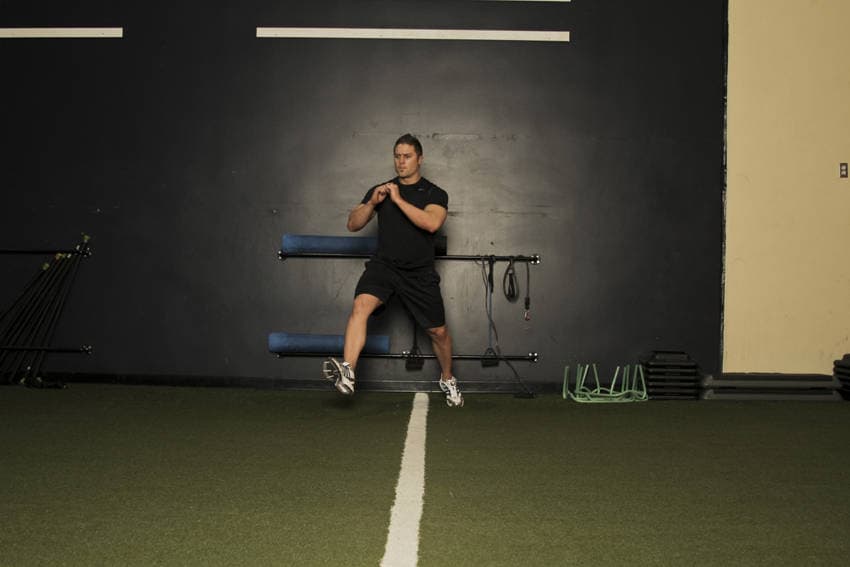
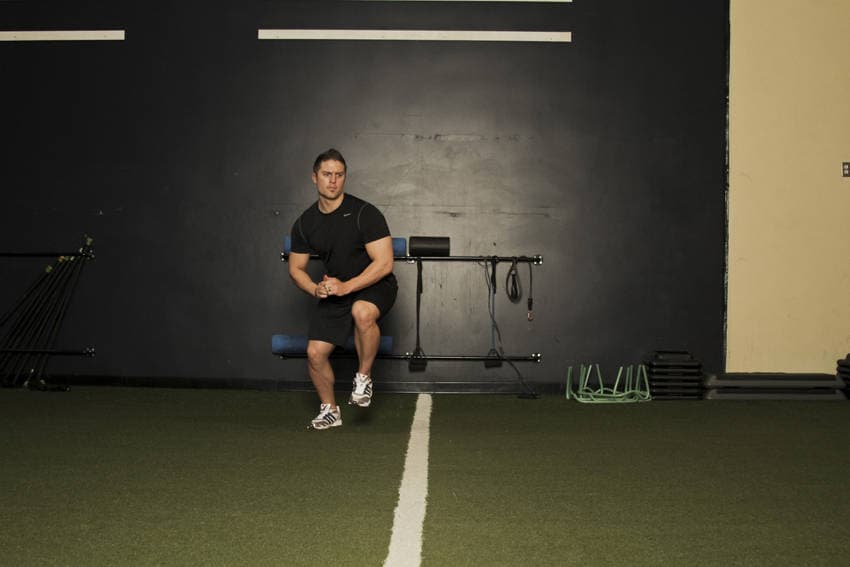


Side-by-Side
Muscle Analysis
Shared
Only in Alternate Leg Diagonal Bound
Instructions
Alternate Leg Diagonal Bound
Assume a comfortable stance with one foot slightly in front of the other.
Begin by pushing off with the front leg, driving the opposite knee forward and as high as possible before landing. Attempt to cover as much distance to each side with each bound.
It may help to use a line on the ground to guage distance from side to side.
Repeat the sequence with the other leg.
Side Standing Long Jump
Begin standing with your feet hip width apart in an athletic stance. Your head and chest should be up, knees and hips slightly bent. This will be your starting position.
Leaning to your right, extend through your hips, knees, and ankles to jump into the air. Block with the arms to lead the movement, jumping as far to your right as you can.
Land facing the same direction with your feet hip width apart, absorbing the impact through your lower body.
Verdict
Both exercises target the quadriceps. Alternate Leg Diagonal Bound is a beginner exercise using none, while Side Standing Long Jump is beginner and uses none.