Exercise Comparison
Alternate Leg Diagonal Bound vs Split Jerk
Side-by-Side
Muscle Analysis
Shared
Only in Alternate Leg Diagonal Bound
Only in Split Jerk
Instructions
Alternate Leg Diagonal Bound
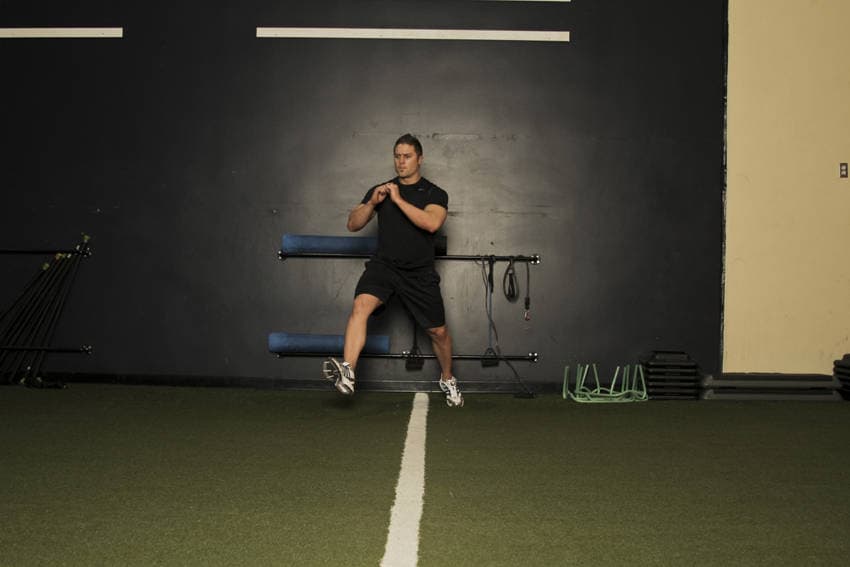
Assume a comfortable stance with one foot slightly in front of the other.
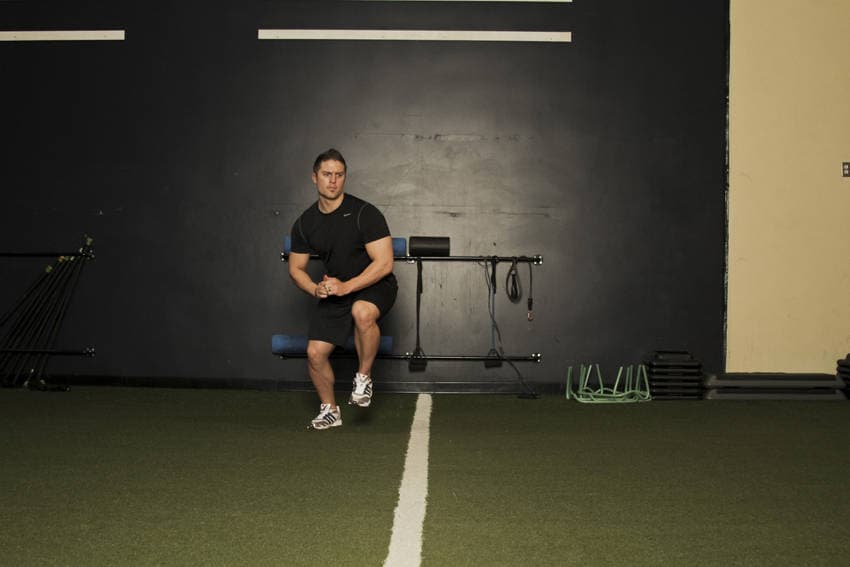
Begin by pushing off with the front leg, driving the opposite knee forward and as high as possible before landing. Attempt to cover as much distance to each side with each bound.
It may help to use a line on the ground to guage distance from side to side.
Repeat the sequence with the other leg.
Split Jerk
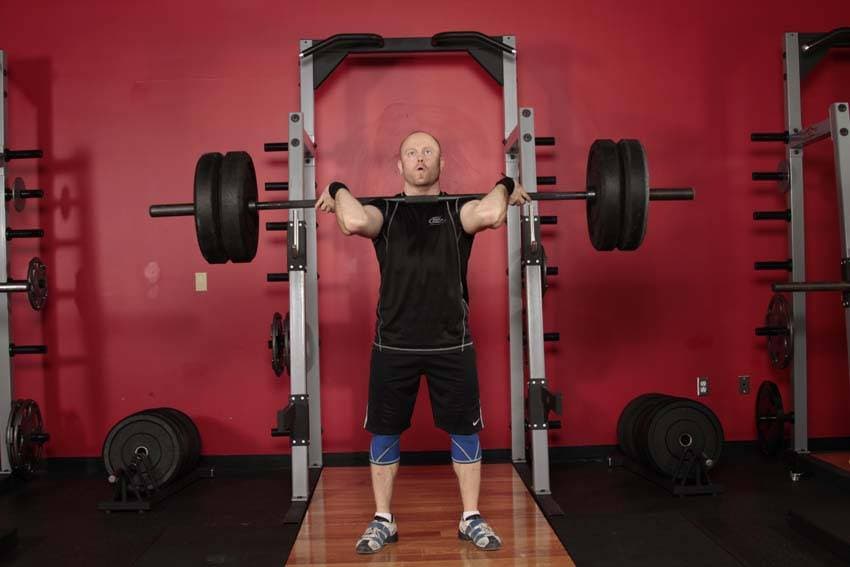
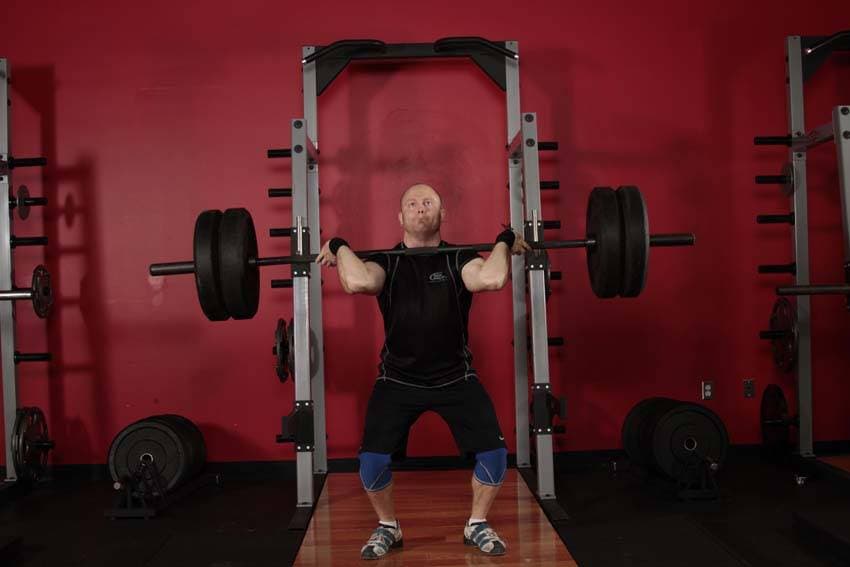
Standing with the weight racked on the front of the shoulders, begin with the dip. With your feet directly under your hips, flex the knees without moving the hips backward.
Go down only slightly, and reverse direction as powerfully as possible. Drive through the heels create as much speed and force as possible, and be sure to move your head out of the way as the bar leaves the shoulders. At this moment as the feet leave the floor, the feet must be placed into the receiving position as quickly as possible.
In the brief moment the feet are not actively driving against the platform, the athlete's effort to push the bar up will drive them down. The feet should be moved to a split stance, one foot forward, one foot back, with the knees partially bent. Receive the bar with the arms locked out overhead.
Return to a standing position, bringing the feet together.
Verdict
Both exercises target the quadriceps. Alternate Leg Diagonal Bound is a beginner exercise using none, while Split Jerk is intermediate and uses barbell. Choose Alternate Leg Diagonal Bound if you're looking for a more accessible option, or Split Jerk for a greater challenge.