Exercise Comparison
Alternate Leg Diagonal Bound vs Standing Hip Flexors
Side-by-Side
Muscle Analysis
Shared
Only in Alternate Leg Diagonal Bound
Instructions
Alternate Leg Diagonal Bound
Assume a comfortable stance with one foot slightly in front of the other.
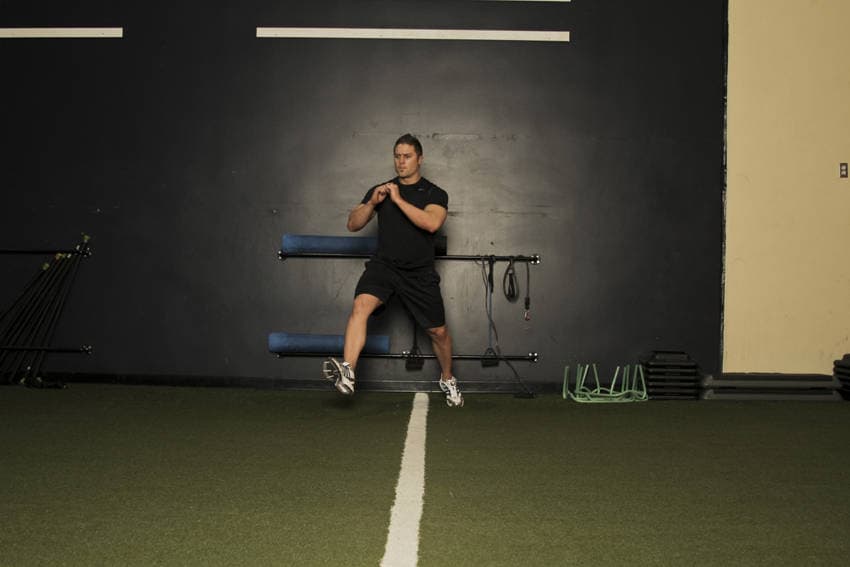
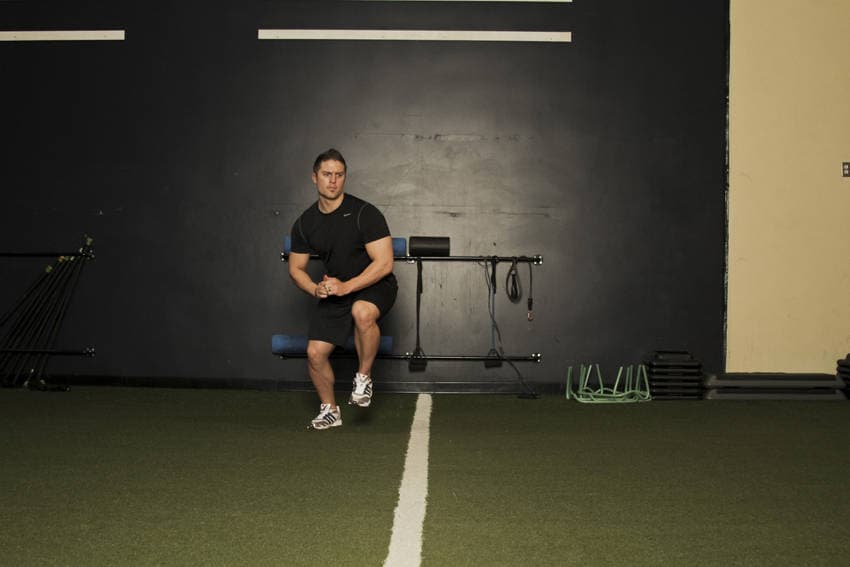
Begin by pushing off with the front leg, driving the opposite knee forward and as high as possible before landing. Attempt to cover as much distance to each side with each bound.
It may help to use a line on the ground to guage distance from side to side.
Repeat the sequence with the other leg.
Standing Hip Flexors
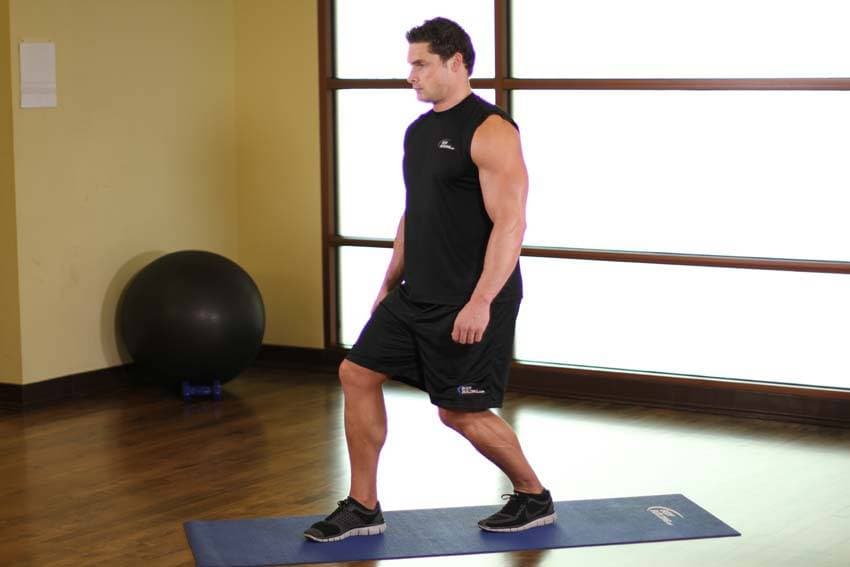
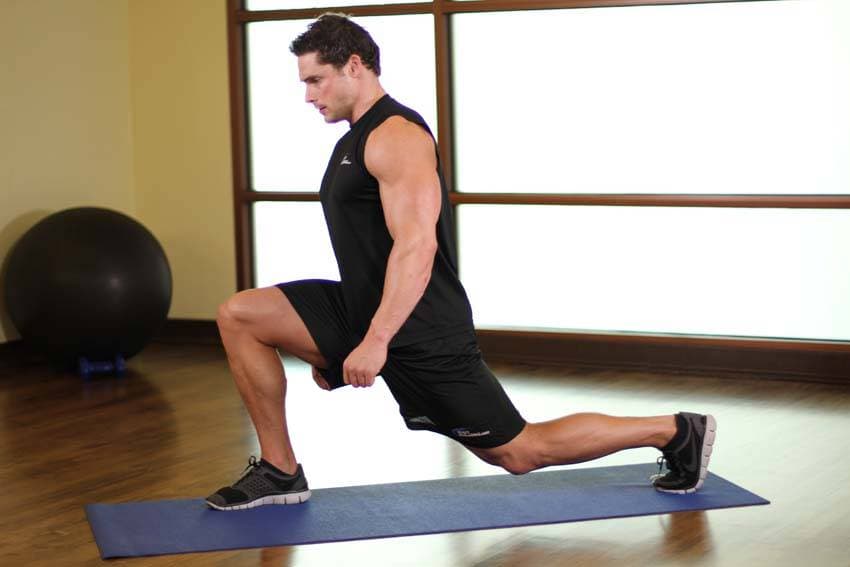
Stand up straight with the spine vertical, the left foot slightly in front of the right.
Bend both knees and lift the back heel off the floor as you press the right hip forward. You can't get a thorough, deep stretch in this position, however, because it's hard to relax the hip flexor and stand on it at the same time. Switch sides.
Verdict
Both exercises target the quadriceps. Alternate Leg Diagonal Bound is a beginner exercise using none, while Standing Hip Flexors is beginner and uses none. Alternate Leg Diagonal Bound is a compound movement working multiple joints, making it better for overall strength. Standing Hip Flexors isolates the target muscle for focused development.