Exercise Comparison
Alternate Leg Diagonal Bound vs Trail Running/Walking
Side-by-Side
Muscle Analysis
Shared
Only in Alternate Leg Diagonal Bound
Instructions
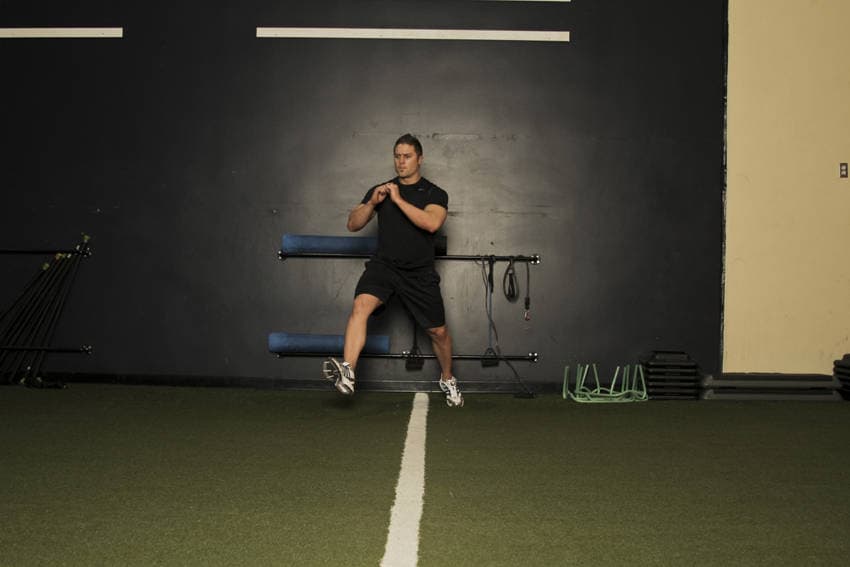
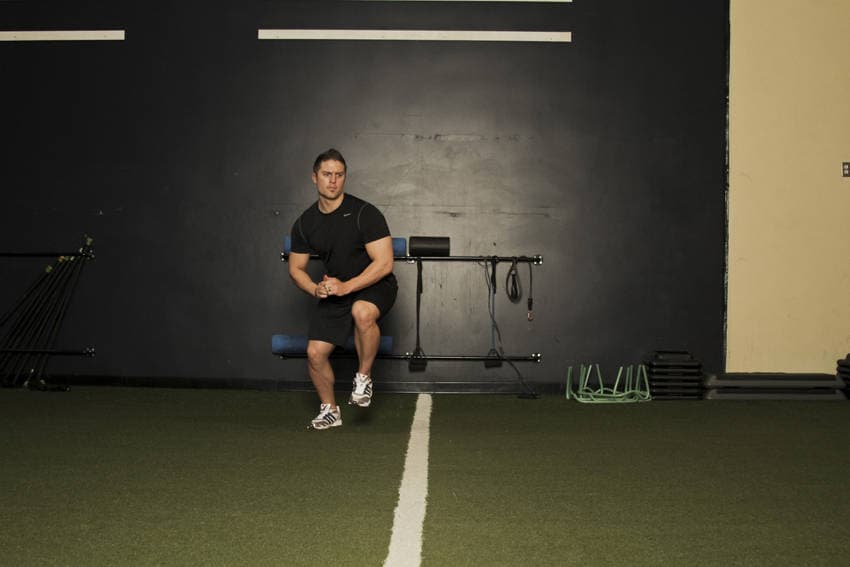
Alternate Leg Diagonal Bound
Assume a comfortable stance with one foot slightly in front of the other.
Begin by pushing off with the front leg, driving the opposite knee forward and as high as possible before landing. Attempt to cover as much distance to each side with each bound.
It may help to use a line on the ground to guage distance from side to side.
Repeat the sequence with the other leg.
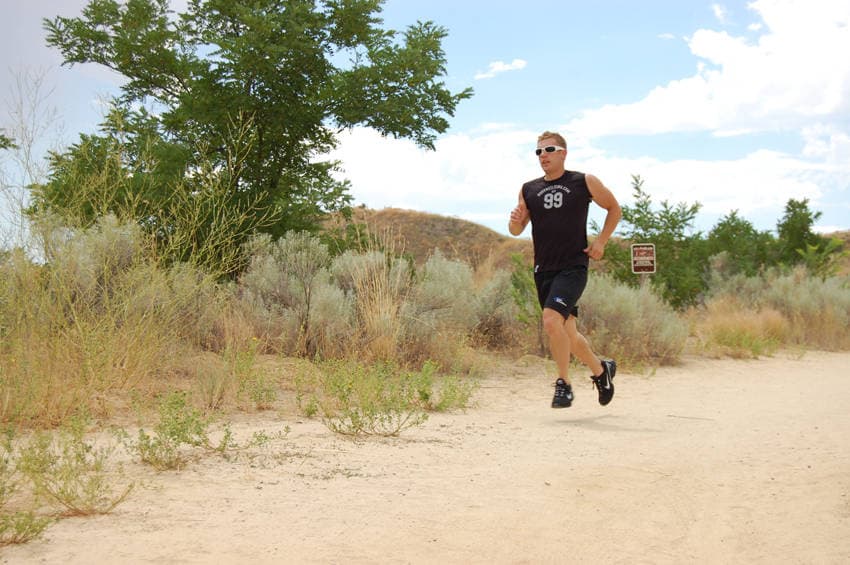
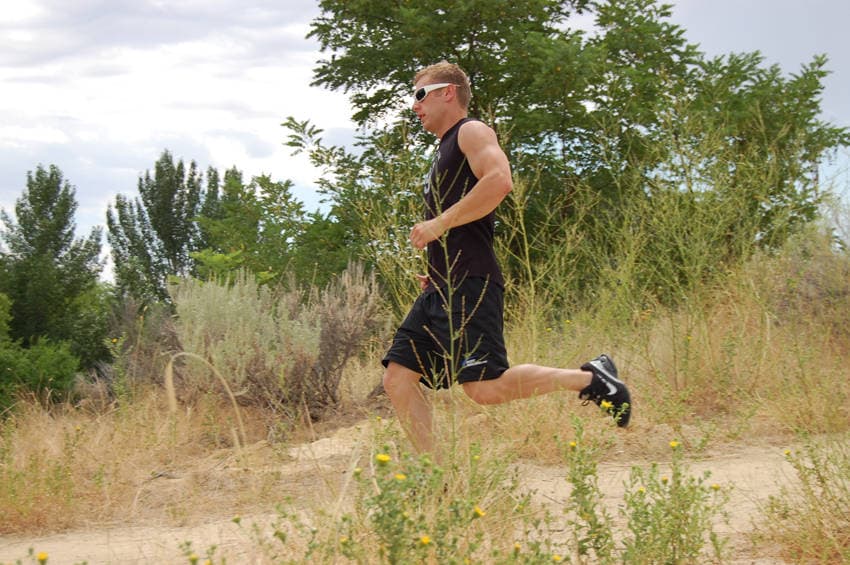
Trail Running/Walking
Running or hiking on trails will get the blood pumping and heart beating almost immediately. Make sure you have good shoes. While you use the muscles in your calves and buttocks to pull yourself up a hill, the knees, joints and ankles absorb the bulk of the pounding coming back down. Take smaller steps as you walk downhill, keep your knees bent to reduce the impact and slow down to avoid falling.
A 150 lb person can burn over 200 calories for 30 minutes walking uphill, compared to 175 on a flat surface. If running the trail, a 150 lb person can burn well over 500 calories in 30 minutes.
Verdict
Both exercises target the quadriceps. Alternate Leg Diagonal Bound is a beginner exercise using none, while Trail Running/Walking is beginner and uses none.