Exercise Comparison
Alternate Leg Diagonal Bound vs Walking, Treadmill
Side-by-Side
Muscle Analysis
Shared
Only in Alternate Leg Diagonal Bound
Instructions
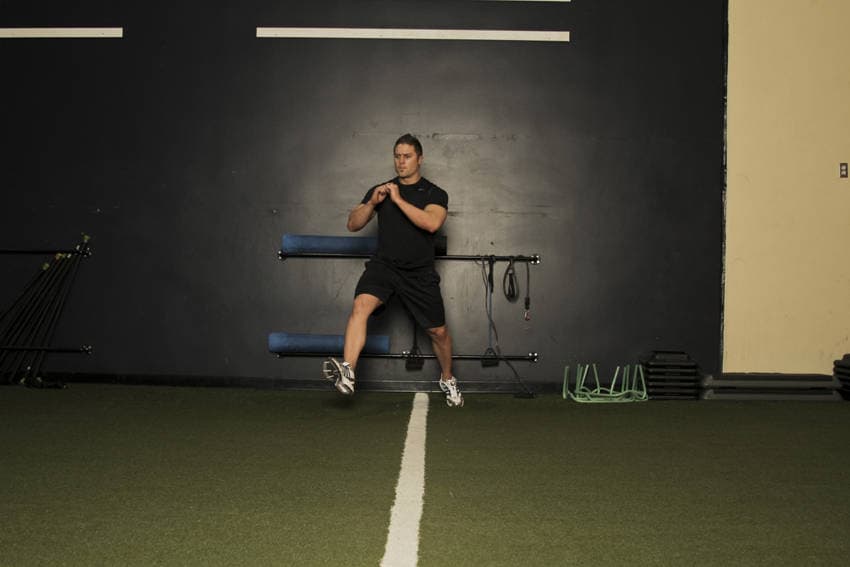
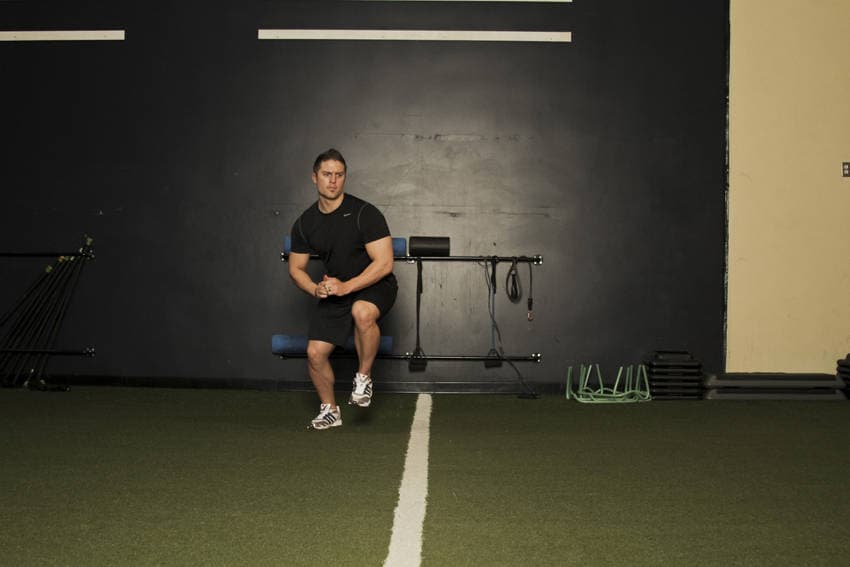
Alternate Leg Diagonal Bound
Assume a comfortable stance with one foot slightly in front of the other.
Begin by pushing off with the front leg, driving the opposite knee forward and as high as possible before landing. Attempt to cover as much distance to each side with each bound.
It may help to use a line on the ground to guage distance from side to side.
Repeat the sequence with the other leg.
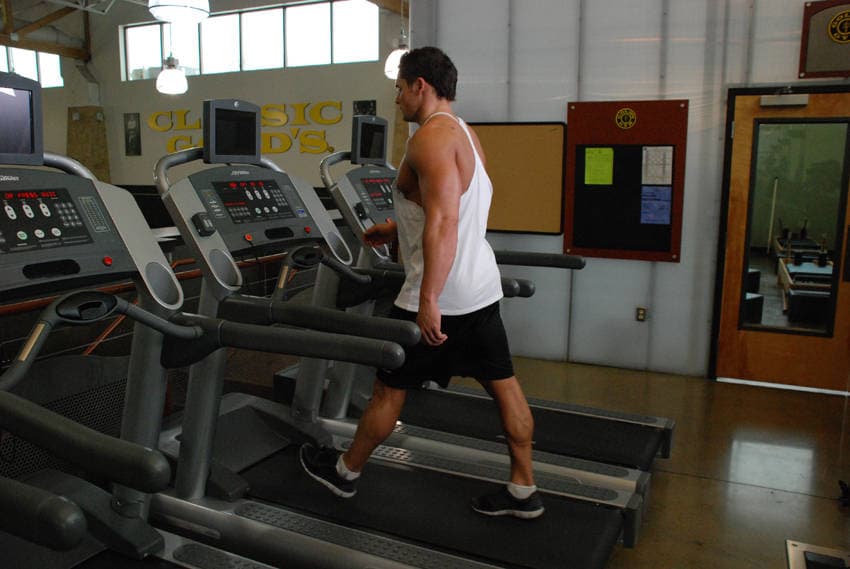
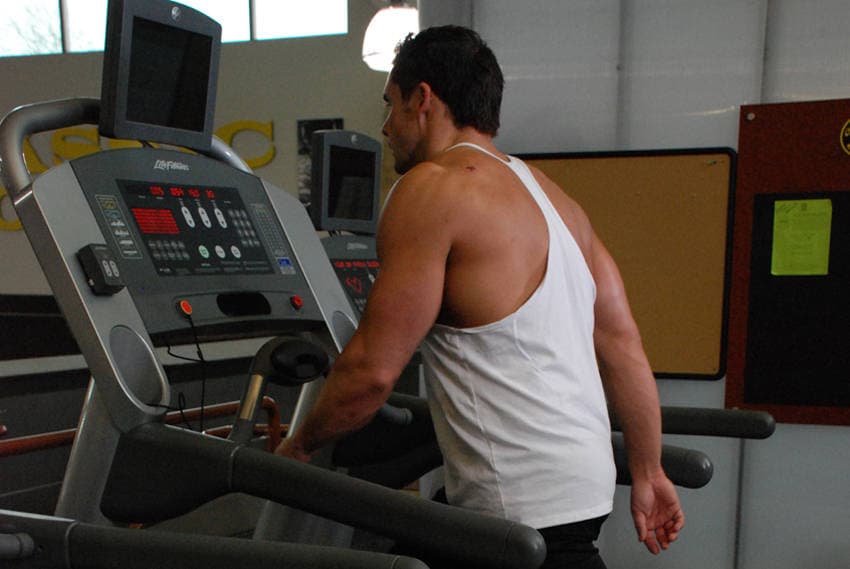
Walking, Treadmill
To begin, step onto the treadmill and select the desired option from the menu. Most treadmills have a manual setting, or you can select a program to run. Typically, you can enter your age and weight to estimate the amount of calories burned during exercise. Elevation can be adjusted to change the intensity of the workout.
Treadmills offer convenience, cardiovascular benefits, and usually have less impact than walking outside. When walking, you should move at a moderate to fast pace, not a leisurely one. Being an activity of lower intensity, walking doesn't burn as many calories as some other activities, but still provides great benefit. A 150 lb person will burn about 175 calories walking 4 miles per hour for 30 minutes, compared to 450 calories running twice as fast. Maintain proper posture as you walk, and only hold onto the handles when necessary, such as when dismounting or checking your heart rate.
Verdict
Both exercises target the quadriceps. Alternate Leg Diagonal Bound is a beginner exercise using none, while Walking, Treadmill is beginner and uses machine. Choose Alternate Leg Diagonal Bound if you have access to none, or Walking, Treadmill if you prefer machine.