Exercise Comparison
Alternating Deltoid Raise vs Standing Low-Pulley Deltoid Raise

Side-by-Side
Muscle Analysis
Shared
Only in Standing Low-Pulley Deltoid Raise
Instructions
Alternating Deltoid Raise
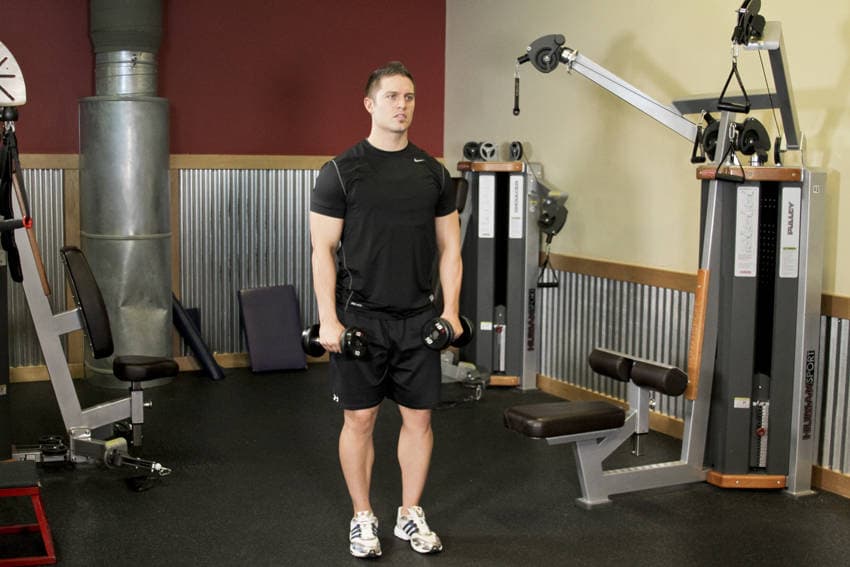
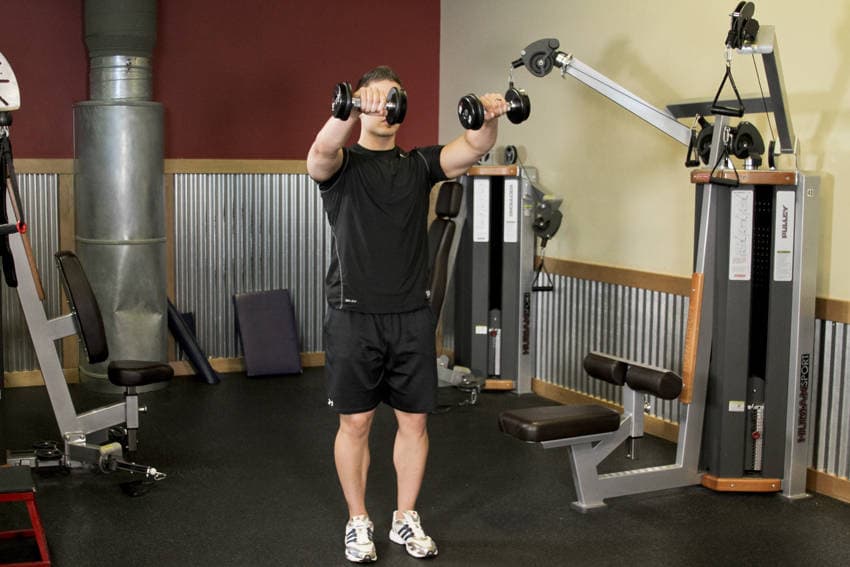
In a standing position, hold a pair of dumbbells at your side.
Keeping your elbows slightly bent, raise the weights directly in front of you to shoulder height, avoiding any swinging or cheating.
Return the weights to your side.
On the next repetition, raise the weights laterally, raising them out to your side to about shoulder height.
Return the weights to the starting position and continue alternating to the front and side.
Standing Low-Pulley Deltoid Raise
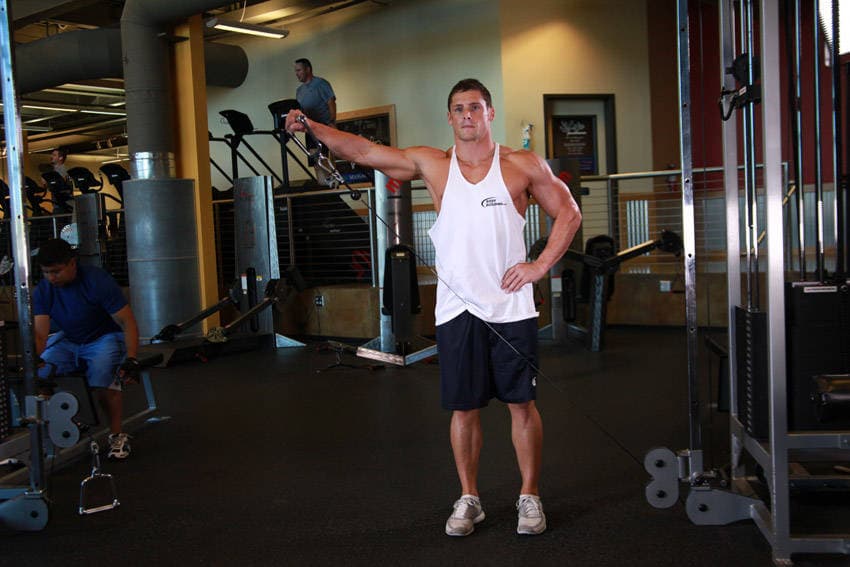
Start by standing to the right side of a low pulley row. Use your left hand to come across the body and grab a single handle attached to the low pulley with a pronated grip (palms facing down). Rest your arm in front of you. Your right hand should grab the machine for better support and balance.
Make sure that your back is erect and your feet are shoulder width apart from each other. This is the starting position.
Begin to use the left hand and come across your body out until it is elevated to shoulder height while exhaling.
Feel the contraction at the top for a second and begin to slowly lower the handle back down to the original starting position while inhaling.
Repeat for the recommended amount of repetitions.
Switch arms and repeat the exercise.
Verdict
Both exercises target the shoulders. Alternating Deltoid Raise is a beginner exercise using dumbbell, while Standing Low-Pulley Deltoid Raise is beginner and uses cable. Choose Alternating Deltoid Raise if you have access to dumbbell, or Standing Low-Pulley Deltoid Raise if you prefer cable.