Exercise Comparison
Alternating Floor Press vs Cable Crossover
Side-by-Side
Muscle Analysis
Shared
Only in Alternating Floor Press
Instructions
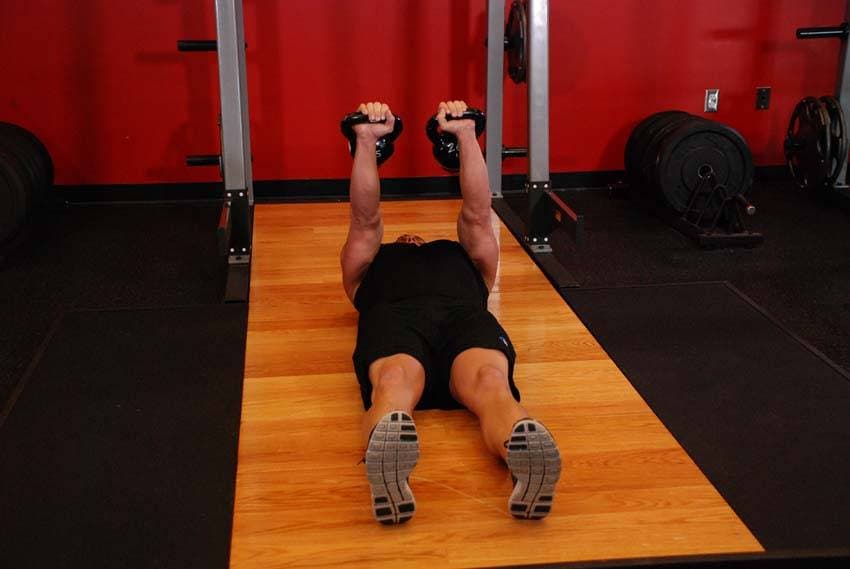
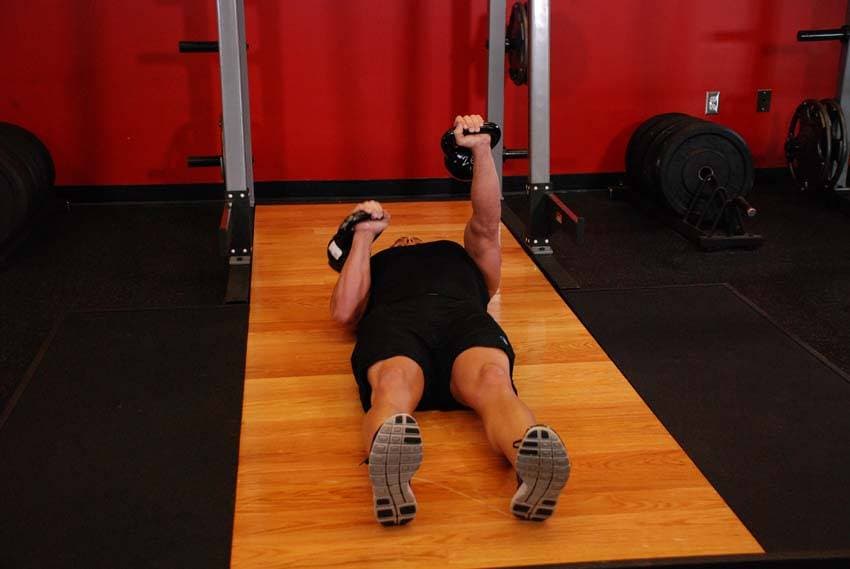
Alternating Floor Press
Lie on the floor with two kettlebells next to your shoulders.
Position one in place on your chest and then the other, gripping the kettlebells on the handle with the palms facing forward.
Extend both arms, so that the kettlebells are being held above your chest. Lower one kettlebell, bringing it to your chest and turn the wrist in the direction of the locked out kettlebell.
Raise the kettlebell and repeat on the opposite side.
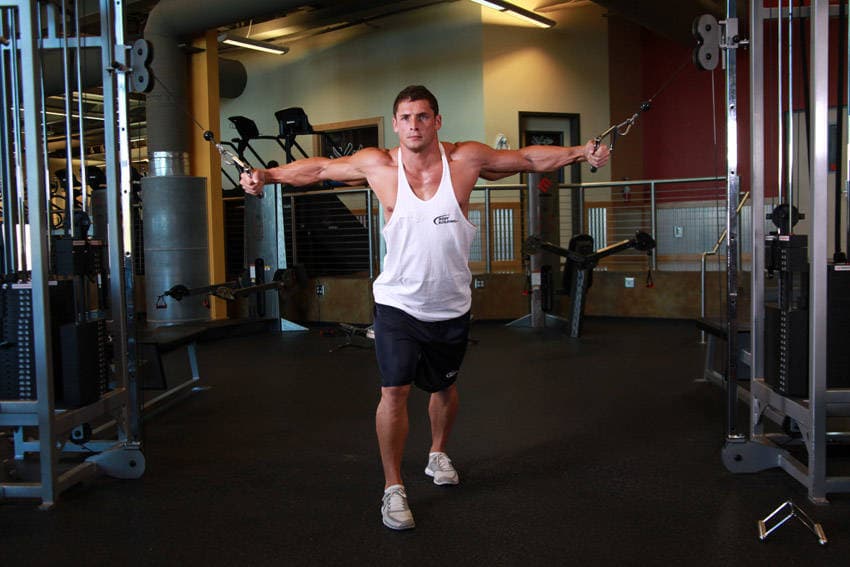
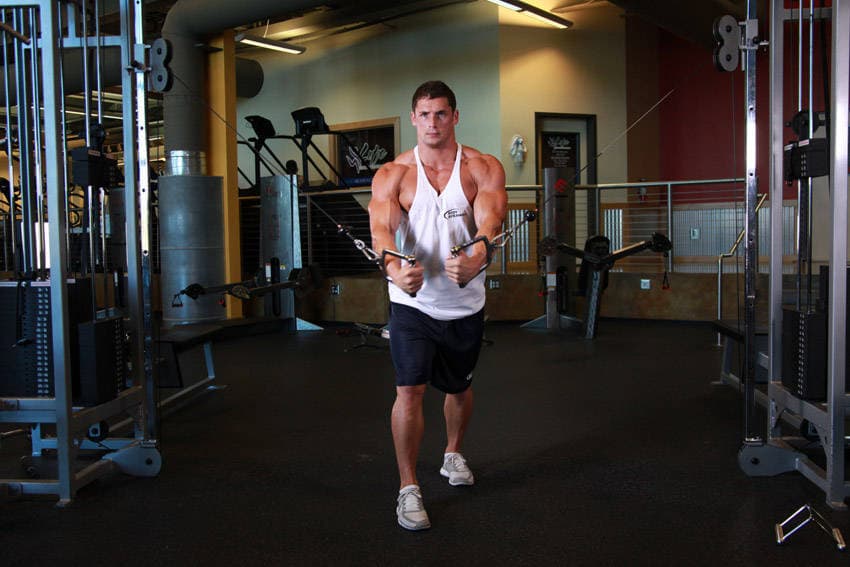
Cable Crossover
To get yourself into the starting position, place the pulleys on a high position (above your head), select the resistance to be used and hold the pulleys in each hand.
Step forward in front of an imaginary straight line between both pulleys while pulling your arms together in front of you. Your torso should have a small forward bend from the waist. This will be your starting position.
With a slight bend on your elbows in order to prevent stress at the biceps tendon, extend your arms to the side (straight out at both sides) in a wide arc until you feel a stretch on your chest. Breathe in as you perform this portion of the movement. Tip: Keep in mind that throughout the movement, the arms and torso should remain stationary; the movement should only occur at the shoulder joint.
Return your arms back to the starting position as you breathe out. Make sure to use the same arc of motion used to lower the weights.
Hold for a second at the starting position and repeat the movement for the prescribed amount of repetitions.
Verdict
Both exercises target the chest. Alternating Floor Press is a beginner exercise using kettlebells, while Cable Crossover is beginner and uses cable. Choose Alternating Floor Press if you have access to kettlebells, or Cable Crossover if you prefer cable. Alternating Floor Press is a compound movement working multiple joints, making it better for overall strength. Cable Crossover isolates the target muscle for focused development.