Exercise Comparison
Alternating Floor Press vs Dumbbell Bench Press
Side-by-Side
Muscle Analysis
Shared
Only in Alternating Floor Press
Instructions
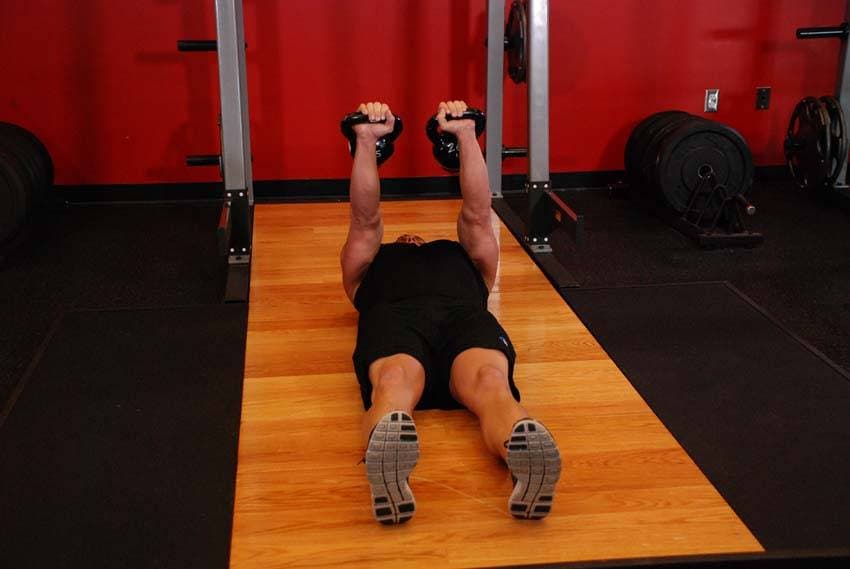
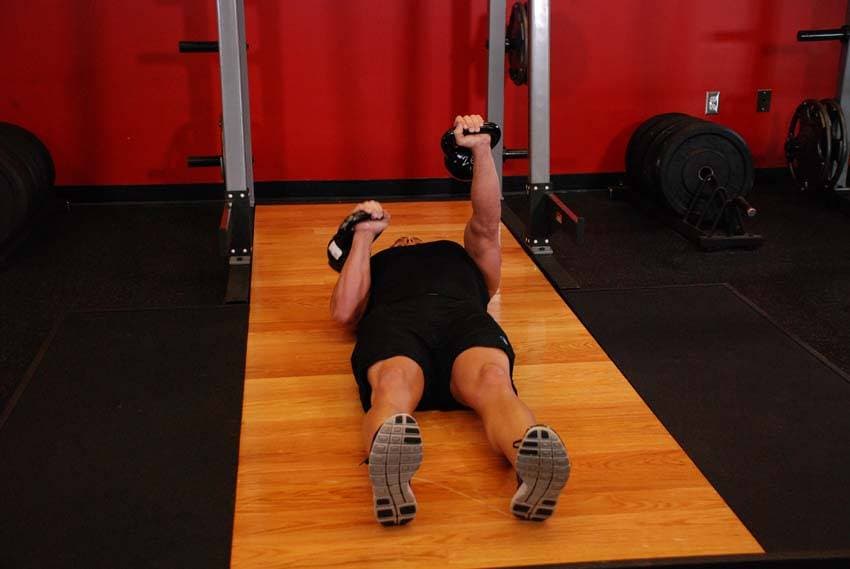
Alternating Floor Press
Lie on the floor with two kettlebells next to your shoulders.
Position one in place on your chest and then the other, gripping the kettlebells on the handle with the palms facing forward.
Extend both arms, so that the kettlebells are being held above your chest. Lower one kettlebell, bringing it to your chest and turn the wrist in the direction of the locked out kettlebell.
Raise the kettlebell and repeat on the opposite side.
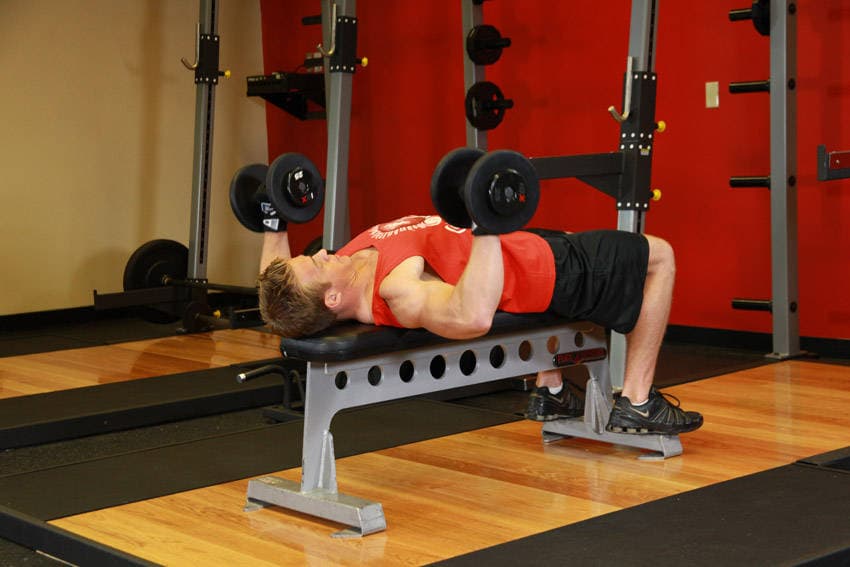
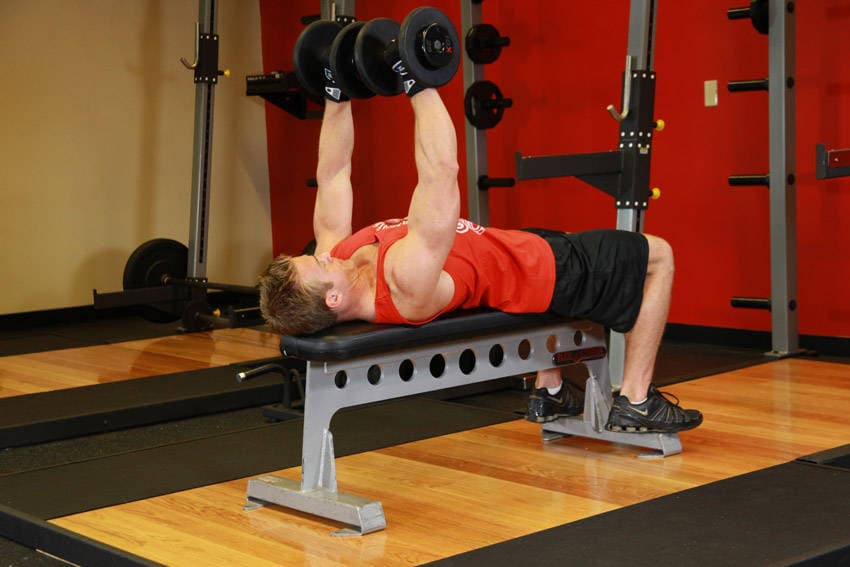
Dumbbell Bench Press
Lie down on a flat bench with a dumbbell in each hand resting on top of your thighs. The palms of your hands will be facing each other.
Then, using your thighs to help raise the dumbbells up, lift the dumbbells one at a time so that you can hold them in front of you at shoulder width.
Once at shoulder width, rotate your wrists forward so that the palms of your hands are facing away from you. The dumbbells should be just to the sides of your chest, with your upper arm and forearm creating a 90 degree angle. Be sure to maintain full control of the dumbbells at all times. This will be your starting position.
Then, as you breathe out, use your chest to push the dumbbells up. Lock your arms at the top of the lift and squeeze your chest, hold for a second and then begin coming down slowly. Tip: Ideally, lowering the weight should take about twice as long as raising it.
Repeat the movement for the prescribed amount of repetitions of your training program.
Verdict
Both exercises target the chest. Alternating Floor Press is a beginner exercise using kettlebells, while Dumbbell Bench Press is beginner and uses dumbbell. Choose Alternating Floor Press if you have access to kettlebells, or Dumbbell Bench Press if you prefer dumbbell.