Exercise Comparison
Alternating Floor Press vs Single-Arm Cable Crossover
Side-by-Side
Muscle Analysis
Shared
Only in Alternating Floor Press
Instructions
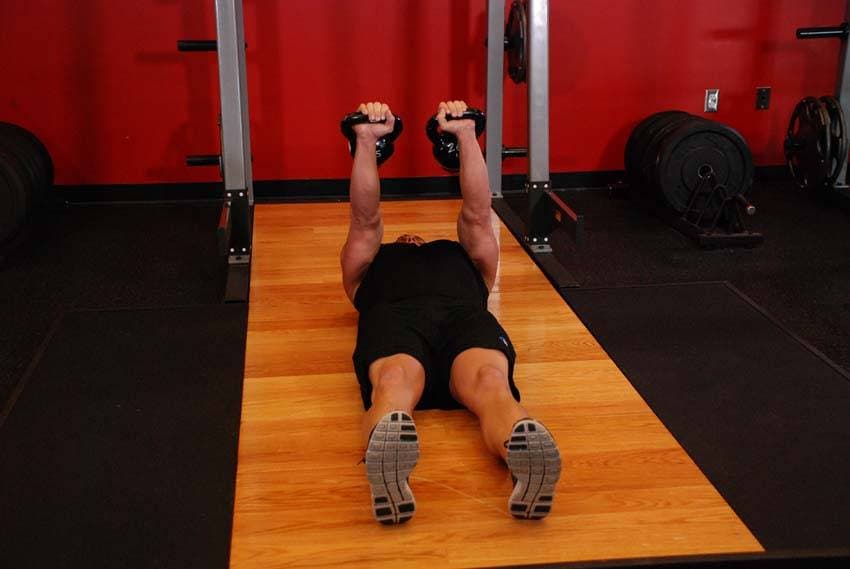
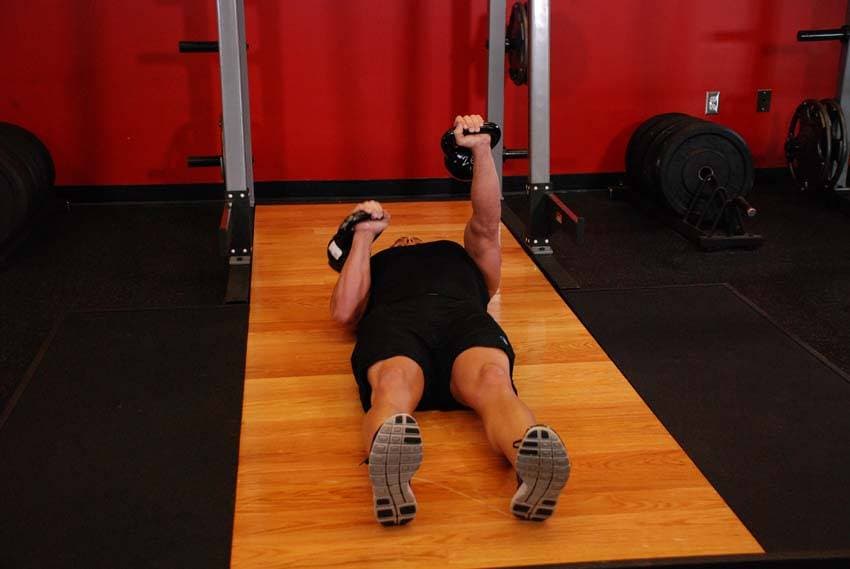
Alternating Floor Press
Lie on the floor with two kettlebells next to your shoulders.
Position one in place on your chest and then the other, gripping the kettlebells on the handle with the palms facing forward.
Extend both arms, so that the kettlebells are being held above your chest. Lower one kettlebell, bringing it to your chest and turn the wrist in the direction of the locked out kettlebell.
Raise the kettlebell and repeat on the opposite side.
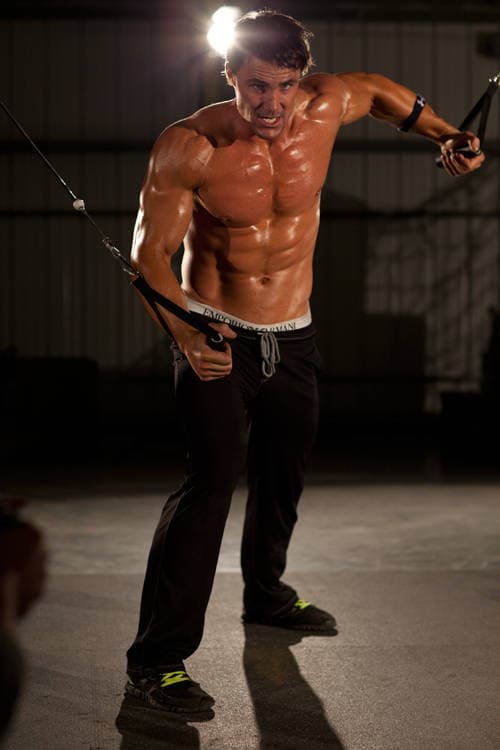
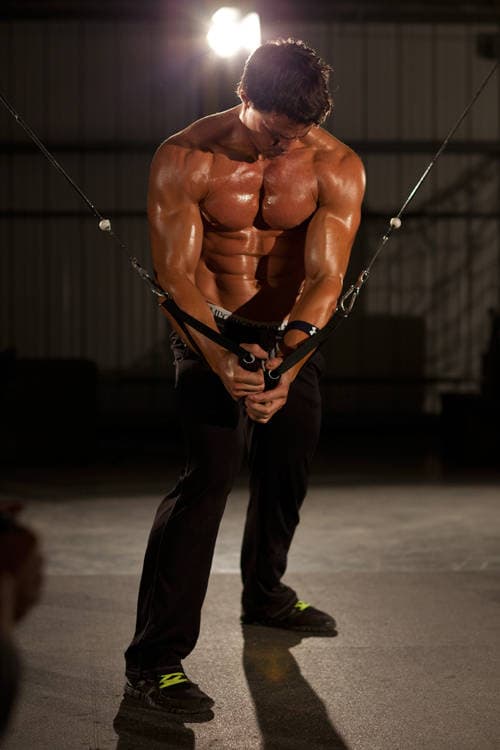
Single-Arm Cable Crossover
Begin by moving the pulleys to the high position, select the resistance to be used, and take a handle in each hand.
Step forward in front of both pulleys with your arms extended in front of you, bringing your hands together. Your head and chest should be up as you lean forward, while your feet should be staggered. This will be your starting position.
Keeping your left arm in place, allow your right arm to extend out to the side, maintaining a slight bend at the elbow. The right arm should be perpendicular to the body at approximately shoulder level.
Return your arm back to the starting position by pulling your hand back to the midline of the body.
Hold for a second at the starting position and repeat the movement on the opposite side. Continue alternating back and forth for the prescribed number of repetitions.
Verdict
Both exercises target the chest. Alternating Floor Press is a beginner exercise using kettlebells, while Single-Arm Cable Crossover is beginner and uses cable. Choose Alternating Floor Press if you have access to kettlebells, or Single-Arm Cable Crossover if you prefer cable. Alternating Floor Press is a compound movement working multiple joints, making it better for overall strength. Single-Arm Cable Crossover isolates the target muscle for focused development.