Exercise Comparison
Balance Board vs Dumbbell Seated One-Leg Calf Raise
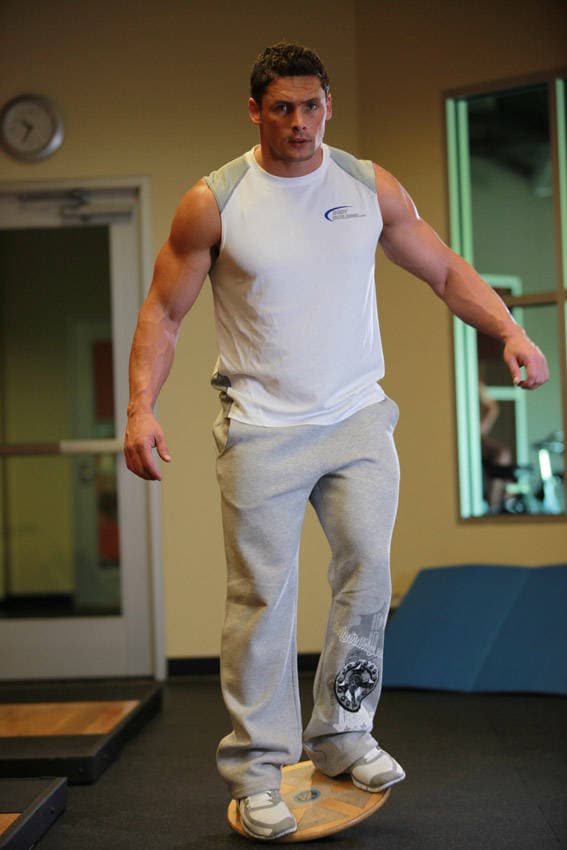
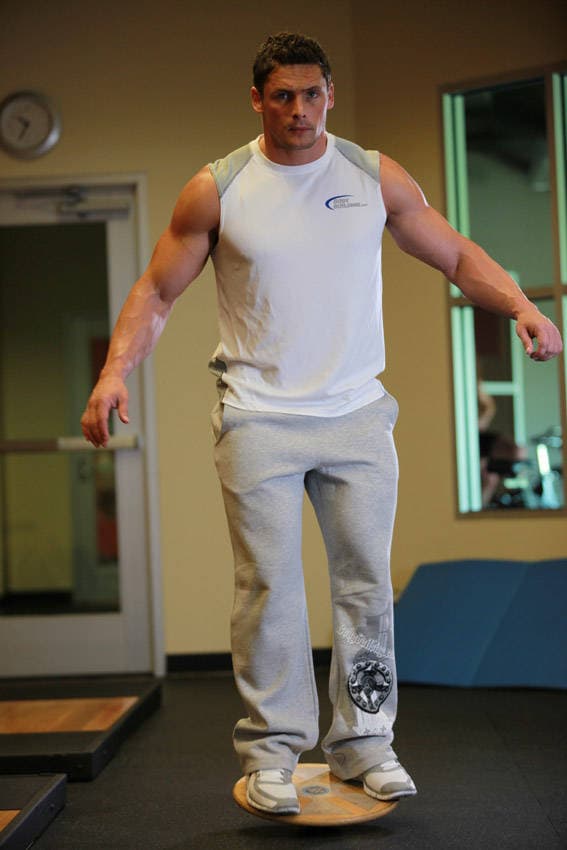
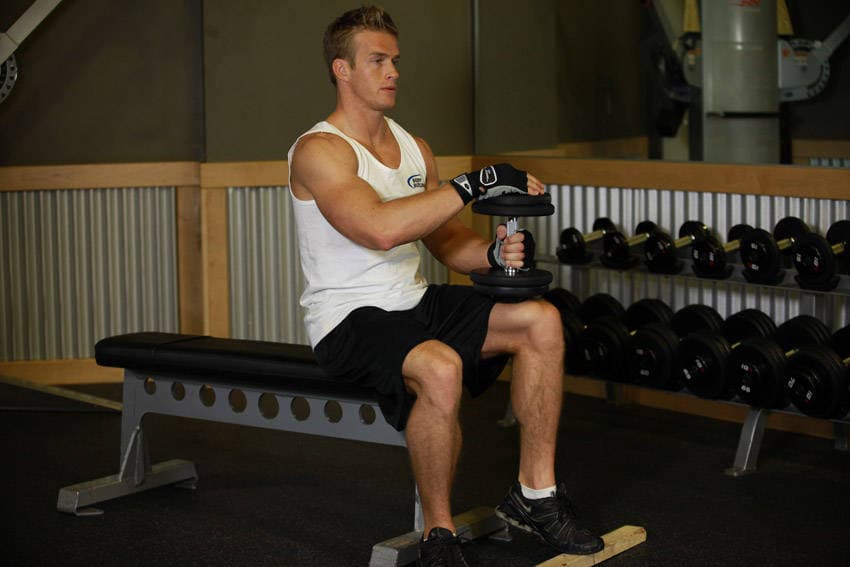
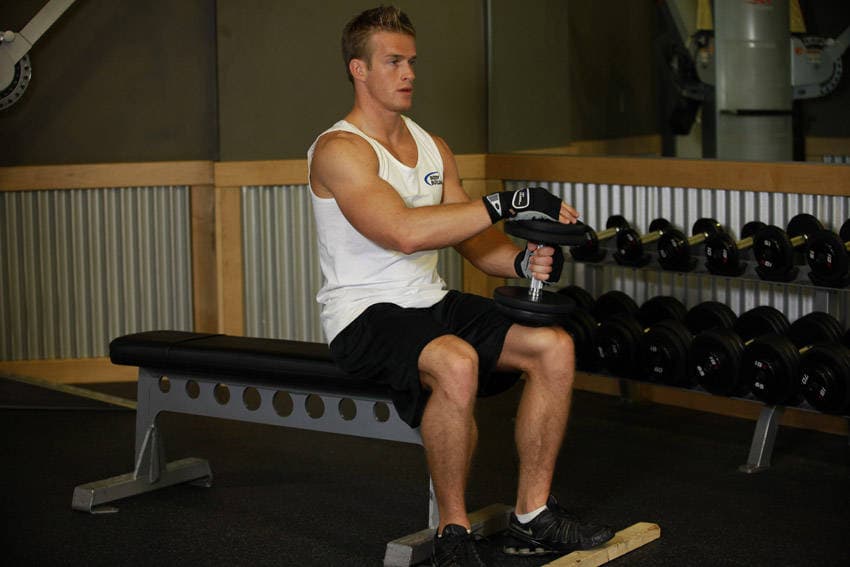
Side-by-Side
Muscle Analysis
Shared
Only in Balance Board
Instructions
Balance Board
Place a balance board in front of you.
Stand up on it and try to balance yourself.
Hold the balance for as long as desired.
Dumbbell Seated One-Leg Calf Raise
Place a block on the floor about 12 inches from a flat bench.
Sit on a flat bench and place a dumbbell on your upper left thigh about 3 inches above your knee.
Now place the ball of your left foot on the block. This will be your starting position.
Raise your toes up as high as possible as you exhale and you contract your calf muscle. Hold the contraction for a second.
Slowly return to the starting position, stretching as far down as possible.
Repeat for your prescribed number of repetitions and then repeat with the right leg.
Verdict
Both exercises target the calves. Balance Board is a beginner exercise using other, while Dumbbell Seated One-Leg Calf Raise is beginner and uses dumbbell. Choose Balance Board if you have access to other, or Dumbbell Seated One-Leg Calf Raise if you prefer dumbbell. Balance Board is a compound movement working multiple joints, making it better for overall strength. Dumbbell Seated One-Leg Calf Raise isolates the target muscle for focused development.