Exercise Comparison
Barbell Shrug vs Upright Cable Row


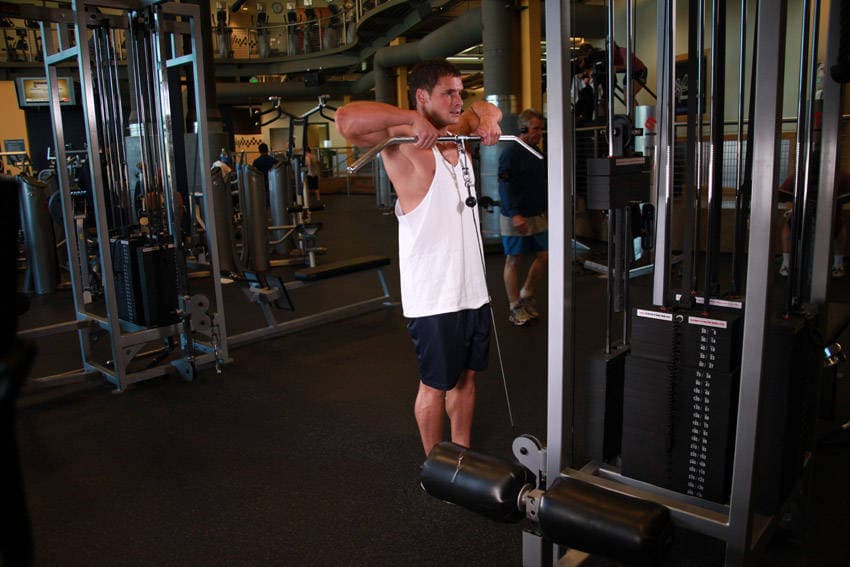
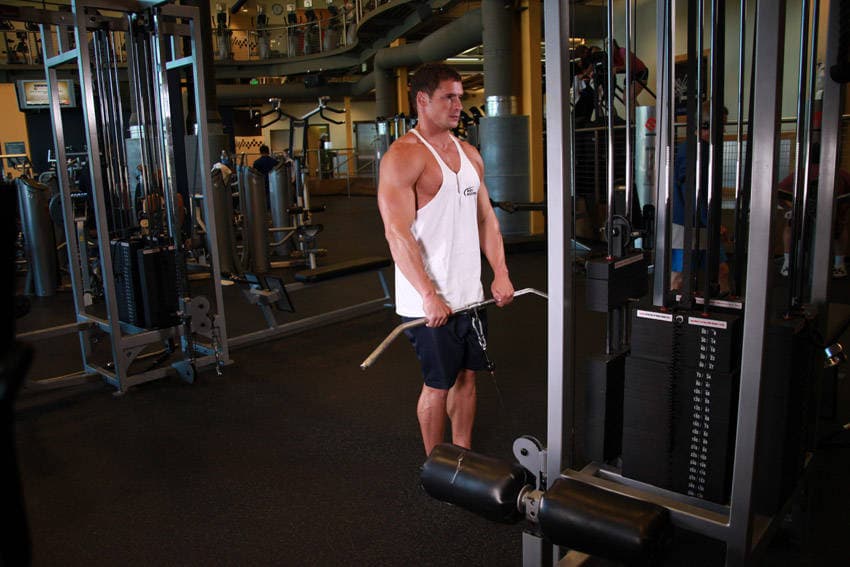
Side-by-Side
Muscle Analysis
Shared
Only in Upright Cable Row
Instructions
Barbell Shrug
Stand up straight with your feet at shoulder width as you hold a barbell with both hands in front of you using a pronated grip (palms facing the thighs). Tip: Your hands should be a little wider than shoulder width apart. You can use wrist wraps for this exercise for a better grip. This will be your starting position.
Raise your shoulders up as far as you can go as you breathe out and hold the contraction for a second. Tip: Refrain from trying to lift the barbell by using your biceps.
Slowly return to the starting position as you breathe in.
Repeat for the recommended amount of repetitions.
Upright Cable Row
Grasp a straight bar cable attachment that is attached to a low pulley with a pronated (palms facing your thighs) grip that is slightly less than shoulder width. The bar should be resting on top of your thighs. Your arms should be extended with a slight bend at the elbows and your back should be straight. This will be your starting position.
Use your side shoulders to lift the cable bar as you exhale. The bar should be close to the body as you move it up. Continue to lift it until it nearly touches your chin. Tip: Your elbows should drive the motion. As you lift the bar, your elbows should always be higher than your forearms. Also, keep your torso stationary and pause for a second at the top of the movement.
Lower the bar back down slowly to the starting position. Inhale as you perform this portion of the movement.
Repeat for the recommended amount of repetitions.
Verdict
Both exercises target the traps. Barbell Shrug is a beginner exercise using barbell, while Upright Cable Row is intermediate and uses cable. Choose Barbell Shrug if you're looking for a more accessible option, or Upright Cable Row for a greater challenge. Upright Cable Row is a compound movement working multiple joints, making it better for overall strength. Barbell Shrug isolates the target muscle for focused development.