Exercise Comparison
Atlas Stones vs Standing Pelvic Tilt
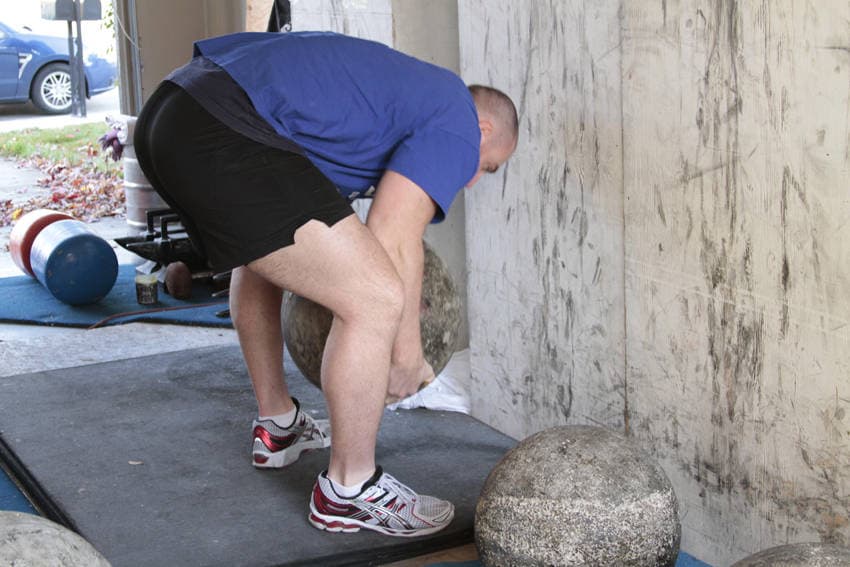
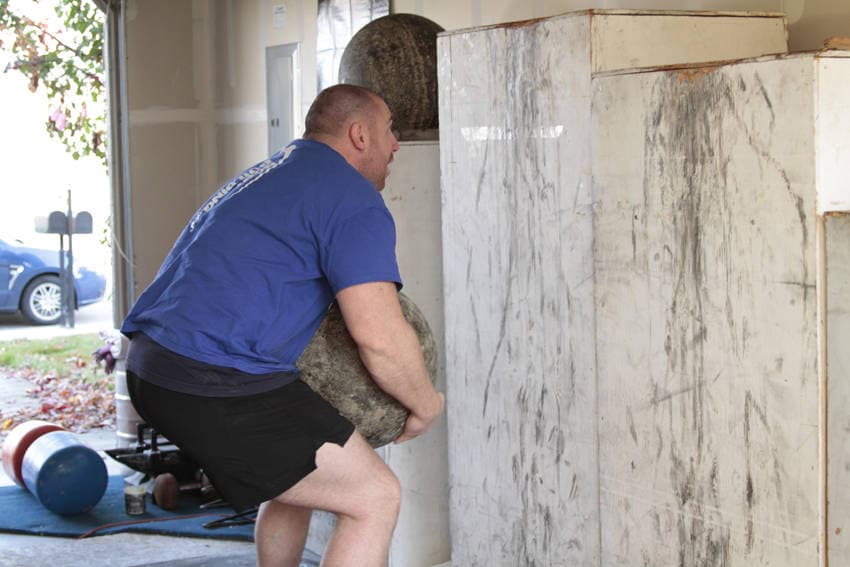


Side-by-Side
Muscle Analysis
Shared
Only in Atlas Stones
Instructions
Atlas Stones
Begin with the atlas stone between your feet. Bend at the hips to wrap your arms vertically around the Atlas Stone, attempting to get your fingers underneath the stone. Many stones will have a small flat portion on the bottom, which will make the stone easier to hold.
Pulling the stone into your torso, drive through the back half of your feet to pull the stone from the ground.
As the stone passes the knees, lap it by sitting backward, pulling the stone on top of your thighs.
Sit low, getting the stone high onto your chest as you change your grip to reach over the stone. Stand, driving through with your hips. Close distance to the loading platform, and lean back, extending the hips to get the stone as high as possible.
Standing Pelvic Tilt
Start off with your feet hip-distance apart.
Bend your knees slightly to keep them soft and springy.
You may want to move your pelvis forward and backward and back few times before holding the tailbone forward in this stretch.
Verdict
Both exercises target the lower back. Atlas Stones is a expert exercise using other, while Standing Pelvic Tilt is beginner and uses none. Choose Standing Pelvic Tilt if you're looking for a more accessible option, or Atlas Stones for a greater challenge. Atlas Stones is a compound movement working multiple joints, making it better for overall strength. Standing Pelvic Tilt isolates the target muscle for focused development.